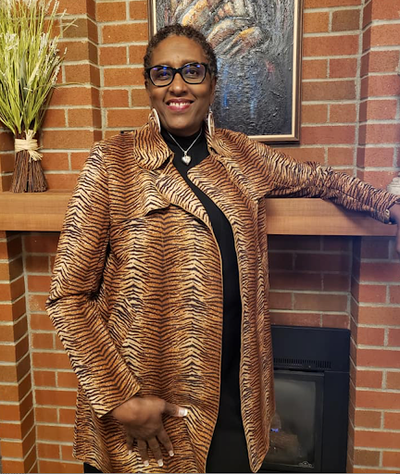
In the heart of Spokane, Washington, one woman’s decades-long commitment to racial equity, community care, and Black liberation helped reshape the city’s story. Sandy Williams was more than a civil rights activist. She was a visionary, organizer, storyteller, bridge-builder, and fierce believer in the power of community.
Through her leadership and commitment to elevating Black voices, Williams challenged Spokane to confront racial injustice while creating spaces where Black people could be heard, supported, celebrated, and empowered. Her work connected racial justice with something equally important: healing.
Her legacy reminds us that justice is not simply about fighting what is wrong. It is also about intentionally building what is right.
A Voice for Spokane’s Black Community
Born and raised in Spokane, Williams understood the realities of racial inequality firsthand. Her activism grew from personal experience and an awareness of generations of Black leaders who had fought before her.
One influential figure was Carl Maxey, Spokane’s first Black attorney and one of the region’s most important civil rights advocates. Like Maxey, Williams understood that racial justice required courage, persistence, organization, and a willingness to challenge systems that were not designed to treat everyone equally.
Her involvement expanded through protests, organizing, advocacy, and efforts to ensure Spokane’s Black community had a voice in decisions affecting their lives. KREM remembered Williams as “the voice of the Black community in Spokane,” describing her as a leader, visionary, and pioneer for justice.
But Williams did not simply speak about change.
She built it.
The Power of Owning Our Stories
One of Williams’ greatest contributions was her understanding of narrative power, the recognition that whoever controls the story can influence how a community is seen, understood, valued, and treated.
Through The Black Lens, Williams created a platform centered on Black news, experiences, achievements, challenges, culture, and perspectives. In a community where Black voices were too often overlooked or misunderstood, The Black Lens created space for Black people to tell their own stories.
Her work reflected a fundamental principle: Black communities should not simply be talked about. Black people must have the opportunity and power to speak for themselves.
Her vision also helped establish the Carl Maxey Center, which became a gathering place and resource for Spokane’s Black community. It represented more than a building. It represented belonging, advocacy, opportunity, mentorship, racial equity, and community power.
Her life’s work was rooted in liberation that was political, social, cultural, economic, and deeply personal.
Roots of Peace: Interrupting Violence Through Community
Another important part of Williams’ vision centered on addressing violence through prevention, intervention, relationships, and community care.
The philosophy behind Roots of Peace and violence interruption efforts challenged the assumption that violence could be solved through punishment alone. Instead, it asked deeper questions: What happened before the violence? Can someone intervene before retaliation occurs? What resources does a person need to choose another path?
Violence interruption models rely on trusted community members who understand neighborhoods, relationships, and circumstances that can cause conflict to escalate. Through mediation, mentoring, education, outreach, and connections to employment, housing, counseling, and other resources, the goal is to interrupt cycles before violence occurs.
That philosophy reflects something central to Williams’ leadership: Community safety requires community investment.
Young people cannot simply be told to make better choices without being given better opportunities. Families cannot thrive while surrounded by poverty, instability, trauma, racism, and inadequate resources. Williams understood that lasting change required addressing those conditions.
Leadership That Became Legacy
What made Williams powerful was not simply the organizations or initiatives associated with her name. It was the philosophy behind them.
She was visionary because she could see possibilities beyond an immediate crisis. She was collaborative because she understood that change required relationships across generations and communities. She was unapologetic because she refused to separate racial justice from the lived experiences of Black people.
She also believed deeply in intergenerational leadership. Young people must be mentored. Elders must be valued. Leaders must create opportunities for others to lead.
That is how movements become legacies.
The work was not without challenges. Community-based justice initiatives often face unstable funding, institutional resistance, disagreements over public safety, and the expectation that communities solve generations of inequality through temporary grants and limited resources. Those obstacles only reinforce why sustained investment in community-led solutions matters.
The Roots Remain
Sandy Williams’ death did not end her influence. Her vision continues through the people she mentored, stories she elevated, organizations she helped build, and community members carrying forward the work of racial equity.
But remembering Sandy Williams must involve more than saying her name.
Legacy requires action.
We honor her when we support Black-led organizations, mentor young people, invest in violence prevention before tragedy happens, challenge racism rather than become comfortable with it, and protect the right of Black communities to tell their own stories.
Sandy Williams planted roots in Spokane: roots of advocacy, truth, Black storytelling, community, liberation, and, perhaps most importantly, roots of peace.
Her life demonstrated that activism is not simply marching in the streets. Sometimes activism looks like opening a door. Creating a newspaper. Mentoring a young person. Mediating a conflict. Building a community center. Challenging an institution. Sitting with a hurting family. Or refusing to allow Black voices to disappear from the story.
As Spokane continues confronting racial inequity, violence, poverty, and disparities in opportunity, Sandy Williams’ blueprint remains relevant.
The question is no longer whether one woman can make a difference. Sandy Williams already answered that.
The question for Spokane now is: Will we protect what she planted? Will we continue what she started? Will we have the courage to build the just, peaceful, and liberated community she believed was possible?
Sandy Williams may no longer be here to lead the work, but the roots remain.