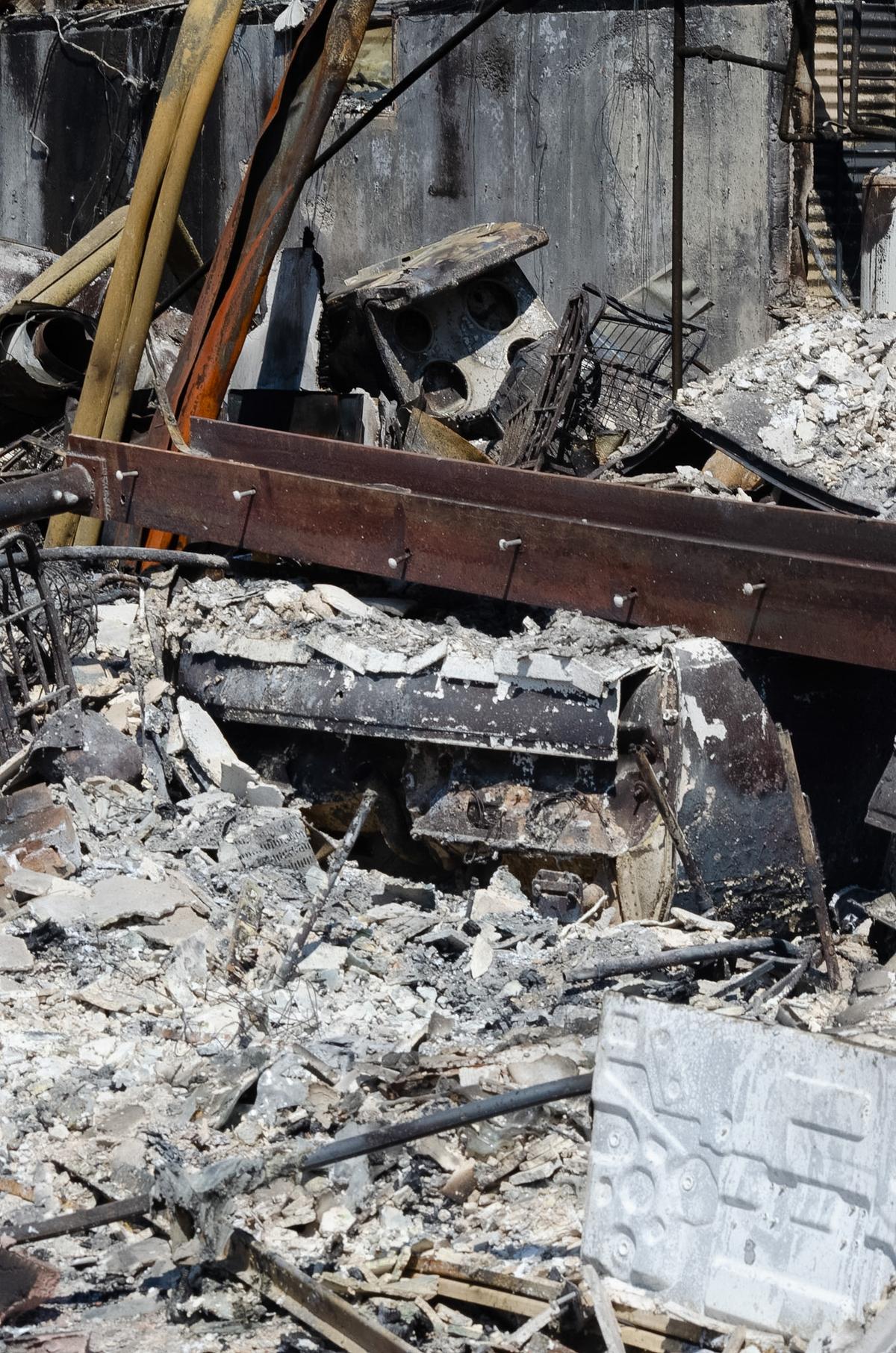
For Devon Traylor, the recent Spokane wildfires turned an ordinary day into a race to safety. Traylor had lived in his home for about three years when fire rapidly approached his neighborhood, forcing him to evacuate with little time to process what was happening. In the midst of smoke, flames and uncertainty, however, Traylor said he witnessed something else: people showing up for one another.
Stephaine Courtney, Shades of Motherhood Network, interviewed Devon Traylor about his experience.
Stephaine Courtney: What happened when you realized the fire was reaching your neighborhood?
Devon Traylor: I noticed it was getting closer, and the sky was getting darker. Finally, I was like, “This is not good.” I called my family and said, “Don’t come back this way. I’m going to evacuate.” All of a sudden, it went to Level 3 within minutes. I was throwing what I could in my car.
I opened my garage, and I could see the fire across the street. Flames—everything was on fire over there. I looked to my right, and all the grass was on fire. I ran out of my garage and banged on my neighbor’s door. I said, “We have to go now.”
Courtney: You also tried to return to the neighborhood. What happened?
Traylor: My neighbor wanted to come back because she had puppies she was raising and didn’t have a chance to get them out. I said, “I’m not going to let you go back by yourself.” We tried, but we didn’t make it maybe a block. There was so much fire and smoke you couldn’t see within a foot of yourself. We were coughing so heavily that we had to turn around.
I spent the next 20 or 30 minutes trying to get people to understand they had to turn around because all of it was on fire.
Courtney: What stood out to you about how people responded?
Traylor: In spite of everything going on, I saw a lot of people helping people more than people panicking. I saw people helping wheel elders out, get people into cars, load things up and direct traffic.
People always think about the worst of humanity in situations, but I honestly saw the best in people. I saw people step up, talk to people and help people they probably never would have encountered on a daily basis.
Courtney: How has helping others affected your own recovery?
Traylor: There are people who have nothing. I still feel it, but I also know I have to move forward. If I can help other people move forward, that’s going to help me. That’s going to help with my healing and trying to get through it. The more I can share and talk to people, that in itself will help us all move forward together.
Courtney: What do families affected by the fires need most?
Traylor: Basic hygiene stuff and clothing. School is getting ready to start, so clothing for kids and families. For people with young kids—diapers, clothing and things for the change of weather.
Think about fall and winterization items. It’s not just what happened in the last two or three weeks. It’s where people are going to be two or three months from now. Christmas is going to be different. Holidays, Thanksgivings and birthdays are going to be different for people. It’s little things like that that will get people through these types of things.
Courtney: What has it been like receiving help when you’re usually the one helping others?
Traylor: It’s humbling because I’m always the one helping people, and now people have to help me. That’s a little different. I’ve talked to people I haven’t talked to in 30 years who have reached out, willing to give anything I need.
We are deeply connected to one another no matter where we’re from, no matter what our incomes are. We’re still ultimately human. We all still need the basic needs: shelter, clothing and warmth.
Courtney: As a parent, how have you helped your son process losing your home?
Traylor: We’ve had a lot of things, and we’re going to miss a lot of things, but we still have memories. Home is still us, no matter what. This is a physical structure. Home is still us. Home is our traditions, our routines and the things that normalize our lives.
I try to keep things as normal as possible and focus on those little things—making them memorable and building new memories. Not to say that we won’t ever have these moments, but this is not the end-all, be-all.