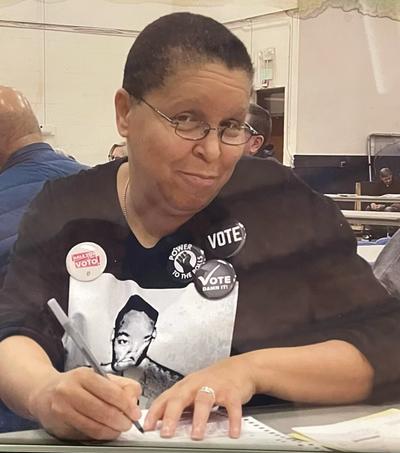
Four years after the passing of Sandy Williams, her legacy lives not only in the institutions and initiatives she helped build, but also in the people she mentored, encouraged and entrusted with carrying the work forward.
For Jillisa Winkler, executive director of the Carl Maxey Center, Sandy’s influence was both personal and professional. Winkler knew Sandy from a young age and later had the opportunity to work alongside her as the Carl Maxey Center was taking shape. What began as an introduction to community work became a lesson in leadership, authenticity and the power of seeing potential in others before they necessarily see it in themselves.
As The Black Lens dedicates its September issue to remembering Sandy Williams, Winkler reflects on the woman behind the public leader, what she learned from working alongside her and the fingerprints Sandy left throughout Spokane.
Q: Can you talk about the start of your relationship with Sandy Williams? She was a mentor of sorts to you, correct?
Jillisa Winkler: That is true. I’ve known Sandy most of my life, via my grandmother being close friends with her mother. As a young girl, I knew her as an activist and somebody who was doing great work while she was in California, but then also when she came back to Washington. I jumped at the opportunity to work with and for her as the Maxey Center opened.
Q: What was it like working with her as a young professional entering community work?
Winkler: I was hired in a group of three, and we all had to work on designing our own job descriptions and figuring out what it would look like to have staff at the Maxey Center. Those first few months were about building processes and systems.
Sandy would send me emails and updates about different people she was talking to and partnerships she was developing, just so I was aware of all the areas the Maxey Center would be touching.
I had also done a few projects with her prior to being on the Maxey Center staff—some things for The Black Lens and community things like voter registration drives. It really was my introduction into community work.
Q: What is something about Sandy, the person behind the public leader, that you want people who never had the opportunity to know her personally to understand?
Winkler: One of the things I admired most about Sandy was that she was her whole self in all the rooms she walked into. Everywhere she showed up, she was Black. Everywhere she showed up, she was queer. Everywhere she showed up, she was a mother.
I think those things helped me understand that my intersectionalities, or pieces of me, are allowed in leadership. A lot of times as leaders, we think we have to fit a certain mold or look a certain way, and I think Sandy was great at breaking those ideals down.
She didn’t dress super fancy but people trusted her voice and her vision. Being yourself as a leader was one of the greatest lessons I got from her.
Q: Four years later, where do you see Sandy’s fingerprints, and what do you believe her lasting legacy will be for Spokane’s Black community?
Winkler: It’s hard to do anything or support any organization that Sandy didn’t at least touch or have interaction or partnership with. I think that is her legacy—this network of people who care about community and who find their role in supporting community.
All of us have different skills, strengths and perspectives. We can do our own individual missions, but it’s all for the betterment of the whole Spokane community.
I also think the reinvestment into East Central and Fifth Avenue is one that she would be most proud of, because that has continued and keeps growing. I hope that as we keep doing that work around Fifth Avenue, we make sure to honor her in each of those steps.
Q: Is there anything else you want to say about Sandy and the people she influenced?
Winkler: I know for myself, it has been a hard four years, but I also gained so many mentors and friends and other leaders who Sandy had an influence on. I think a lot of us are still fulfilling our Sandy mission.
She saw leadership and skills in us that we weren’t even sure of yet. I’m excited to see what else keeps coming from her putting people in these positions where it’s like, “Yeah, that’s your mission now,” and how we can keep supporting each other and working toward those things.