Michael Bethely’s reflection on his retreat to South Africa centers on a powerful theme of resilience, memory, and responsibility. His experience remains open-ended and deeply personal, shaped by what he witnessed and what he continues to process. As he explains, “I’m still processing; there was so much to absorb so much to take in.”
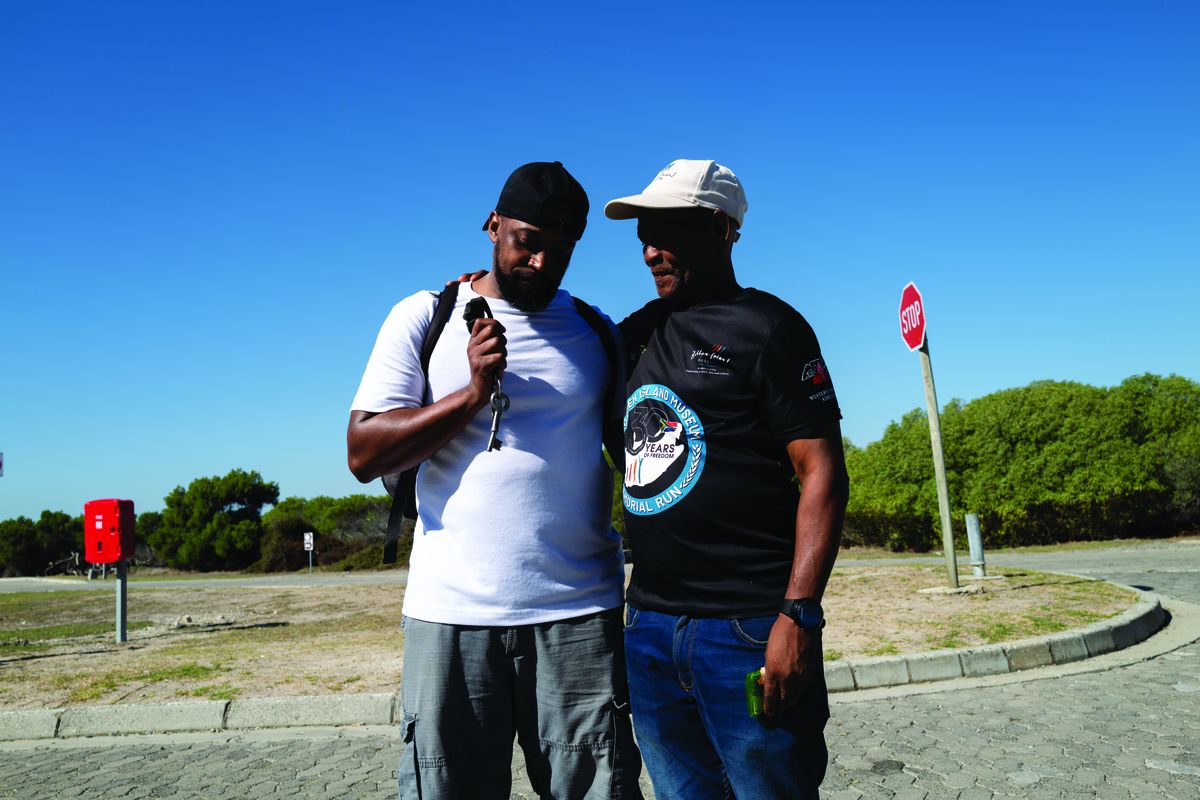
A defining part of his journey came through direct encounters with the physical sites of oppression tied to apartheid and earlier colonial violence. Visiting the Cape of Good Hope introduced him to the early history of Dutch colonization and the systems of enslavement that followed. The experience deepened at Robben Island, where political prisoners were held.. What made this moment especially powerful was not only the history itself but how it was shared. A former prisoner led the tour, guiding visitors through the very space where he had once been confined. Bethely recalls, “he’s walking around with the very key that locked him up. He’s opening the cell that kept him captive so that we could see it.”
This moment reshaped his understanding of resilience. It was no longer distant or symbolic. It was lived, visible, and active. The guide’s willingness to return to that space and share his story revealed a level of strength that Bethely found difficult to fully comprehend. A similar experience at the women’s prison, led by another former prisoner, reinforced this perspective. Rather than seeing these acts as reliving trauma, he interprets them as a form of purpose or release, a way of transforming pain into education and testimony.
Bethely is also struck by how recent this history is. Apartheid exists within a timeframe that overlaps with his own life, which intensifies its impact. This realization leads him to reflect on the persistence of racial inequality and ideology in the United States. He notes that “there is this audacity that the Black race is inferior… and I see it… still being reflected,” drawing a clear connection between what he witnessed abroad and what continues at home.
At the center of his reflection is the concept of “holding space,” a phrase that stayed with him throughout the trip. It becomes both a personal and communal responsibility. Holding space means being present with the weight of these histories, honoring the stories shared, and carrying that awareness into daily life with intention.
The experience does not resolve neatly. Instead, it continues to unfold. As Bethely reflects, “South Africa changed my life… and I’m still figuring out how.”