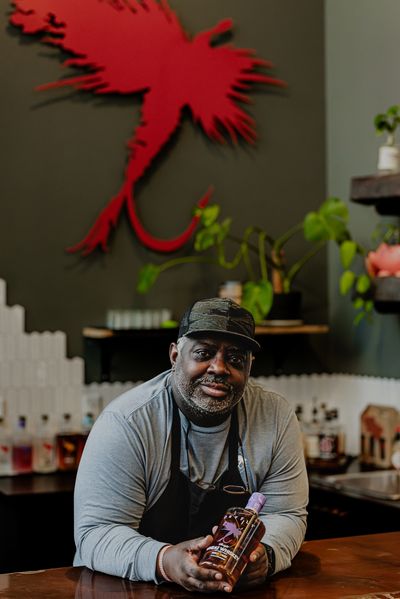
My journey into the kitchen didn’t start with textbooks or fancy schools; it started with the magic I saw my grandmother create. Growing up, I watched her use a “little bit of this, a little bit of that” to turn simple ingredients into something incredible. That early exposure to the artistry of cooking is where I first learned that a kitchen is a place where you can make magic happen.
Before landing in Spokane, I spent time in Chicago, and those years were foundational for my style. I’ve always been drawn to flavor combinations that might not technically seem like they should work on paper, but when you get them right, they sing.
What eventually led me to Dry Fly Distilling was the opportunity to blend those regional tastes I’ve picked up with the unique spirits they’re known for. In my role here, I focus on creating a menu that doesn’t just sit alongside the spirits but actually incorporates them. A great example of this is our Peachy Pork flatbread–it uses a Dry Fly Bourbon BBQ sauce to pull together smoked pork, peaches, and pickled onions.
For me, being at Dry Fly is about taking everything I learned from my grandmother’s kitchen and my years in the industry and using it to push the boundaries of what distillery food can be.
What I love most is that the kitchen is my stage for truth-telling. When I put on my whites, I’m not just a cook; I’m a historian , a storyteller using ingredients instead of words to honor where we’ve been and where we’re going.
Here’s how that creativity flows through my work:
My creativity comes from taking “scraps” or humble ingredients–the things our ancestors were forced to cook with–and turning them into magic. When I serve a perfectly braised oxtail or elevated grits, I’m telling a story of resilience and brilliance.
I grew up watching the women in my family cook by feel, not by a book. I love that I can take that “soul” and pair it with modern techniques. It’s about that fusion of heritage and innovation, like using traditional African spices in a classic French reduction.
For me, being a chef is about making sure our culture isn’t just a footnote in culinary history–it’s the main course. When a guest tastes my food, I want them to feel the history, the struggle, and the absolute joy of our people.
There’s three things I would tell young adults:
First, Season with Your Soul.
You’ve got to find what makes your blood pump, but keep your eyes on the whole kitchen. Don’t ever mute your volume. Your heritage, your culture, and that unique rhythm in your step–that’s your secret sauce. In a world of carbon copies, being “different” is how you become essential. If they can’t find a seat for you at the table, you build a bigger table.
Second, The Recipe is Gonna Change.
Purpose isn’t a straight line; it’s a slow-braised journey. You might start out thinking you’re a pastry chef only to realize you’ve got a genius for the grill. That’s not a failure, that’s a pivot. Don’t get so locked into the “plan” that you miss the “calling.” True purpose lives where your joy meets the world’s hunger.
Third, Protect Your Fire.
This world is a walk-in freezer–it’ll try to chill your spirit if you let it. Whether you’re in a kitchen, a boardroom, or a lab, you’ve got to guard your “why.” If you lose that spark, the work just becomes a shift you’re trying to survive. Keep that fire in your belly roaring, and don’t let anyone else touch your thermostat.
Choose the path that makes that 5 a.m. alarm feel like an invitation, not a chore. When you pour love into the work, you aren’t just earning a paycheck–you’re leaving a legacy.