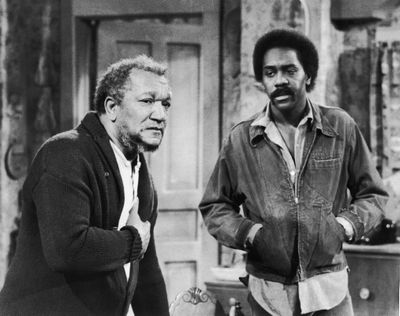
The passing of Demond Wilson, on Jan. 30, forever known to generations as Lamont Sanford, marks more than the loss of a beloved actor. It represents the closing of a chapter in American cultural history–one that blended laughter with truth, faith with fortitude, and Black family life with entrepreneurial dignity at a time when such portrayals were both rare and courageous. Wilson was 79 years old. His son confirmed that he passed peacefully at home in Palm Springs following complications from cancer. Demond was ordained as a minister, founded Restoration House of God, and spent years preaching, teaching, and doing ministry work –often focusing on spiritual renewal, personal responsibility and redemption. He wrote Christian books and spoke openly about how his faith reshaped his identity beyond television fame.
From 1972 to 1977, Sanford and Son was nothing short of pioneering. At its center was the complicated, loving, and often combustible relationship between Lamont Sanford and his father Fred, portrayed by the legendary Redd Foxx. Where Fred Sanford was theatrical chaos, Lamont was calm and showed resolve. Where the insults flew, Lamont’s silences spoke volumes. He was the moral compass, the thinker, the son trying to love a difficult father without losing himself in the process.
That balance mirrored Wilson’s real life. Far from the “Big Dummy” Fred Sanford jokingly labeled him, Wilson was thoughtful, disciplined, and spiritually curious. In later interviews, Wilson revealed a sobering truth of early 1970s television: both he and Foxx sometimes carried pistols on set during live tapings. This was not bravado–it was survival. In a racially tense America, two outspoken Black men headlining a national hit sitcom understood that visibility could also invite danger. The laughter America enjoyed each week was layered over real fear, courage, and awareness.
What made Sanford and Son revolutionary was not just its humor, but its premise. It portrayed a single African American father and son as entrepreneurs, junk dealers running a family business. Over 50 years ago, American television showed Black men working together, disagreeing, reconciling, and building something of their own. Ironically, when the show first aired, Black Americans had one of the highest marriage rates in the nation. Today, Black families rank among the lowest in marriage statistics–yet there has been no reboot, no modern equivalent centering a Black father and son running a business together. That absence is telling. Perhaps it is also a call.
In the recent heightened fallout of debaucherous Hollywood tales of sexual abuse and other improprieties among several celebrities, we have watched giants fall. Probably most poignant aspect of Wilson’s entertainment legacy may be how he recognized Hollywood’s underbelly and carefully avoided it. Wilson shared in recent years how he evaded scandal by refusing to place himself in environments that would compromise his integrity and reputation, exhibiting a keen discernment of just how exploitative the entertainment industry was, is, and has always been, and how he was able to uphold his integrity and ethics. His restraint stands as a true testament to fortitude and temperance, a bold and unapologetic strength that protected not only his career but his character.
As we reflect on Wilson’s passing, perhaps the most fitting tribute is to ask what he might ask of us now: Why have we stopped telling stories that uplift Black fatherhood, Black enterprise, and Black family continuity? And if we once did it–boldly, successfully, and truthfully–why not again?