Black Lens staff reports
In February, local Spokane leaders traveled to the Washington State Capitol in Olympia for Advocacy Days, standing in the halls where policy becomes law to ensure that community voices were not absent from the conversation. They met with legislators to advocate for funding tied to essential community services and structures, including housing, education, and critical support systems that stabilize families.
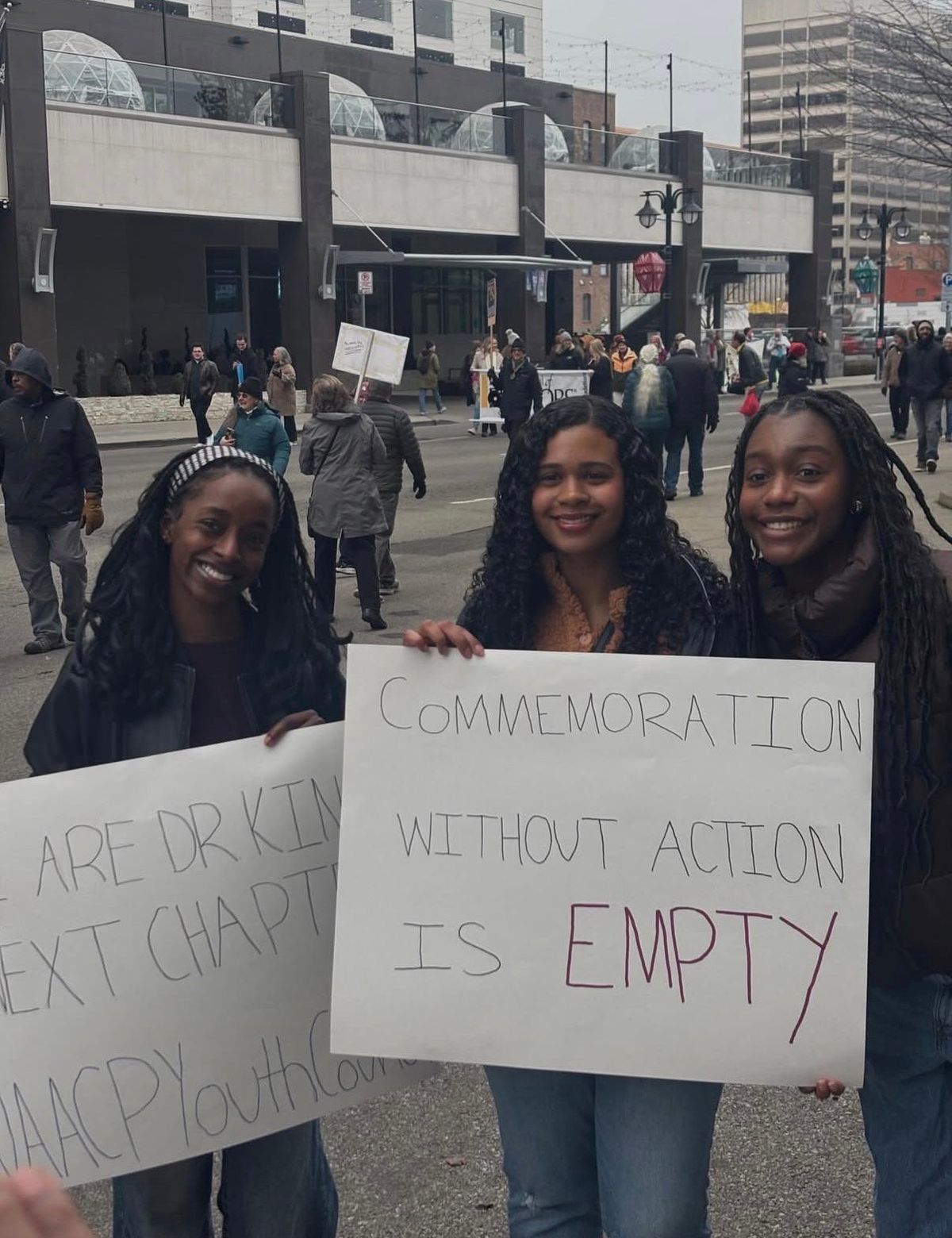
Among those raising her voice was Jada Richardson, an Eastern Washington University student and member of the Spokane NAACP Youth Council. Her presence underscored the power of civic duty and youth engagement in democracy. Advocacy Days serve as a reminder that democracy is not passive – it requires participation. When community members step forward to speak directly to lawmakers, they affirm a fundamental truth: policy should reflect the lived realities of the people, and collective voices have the power to shape just outcomes. Read her words below:
Good afternoon, everyone.
First, I am going to start with a quote from Malcolm X: “Land is the basis of all independence. Land is the basis of freedom, justice, and equality.”
If land is the foundation of freedom, then housing is the foundation of dignity. So what does it say about us as a society when we have to beg our communities, our local governments, and our federal government to honor the humanity of people who are unhoused?
What does it say when our systems police poverty, penalize survival, and place blame on individuals instead of holding themselves accountable for ongoing structural failures – failures that leave our elders, our youth, and our neighbors without roofs over their heads? Failures that force people to sleep in unsafe and exposed spaces. Failures that abandon disabled people, survivors of violence, LGBTQ+ folks, Black and Brown communities, and people with mental health needs at disproportionately high rates.
Because houselessness does not exist in isolation. It sits at the intersection of race, class, disability, gender, age, and access to healthcare. It is shaped by anti-Blackness, by the criminalization of poverty, by broken foster care systems, by mass incarceration, and by the displacement of Indigenous people and the colonization of their land.
This country was built on stolen land, and that original act of violence set the foundation for today’s housing crisis. Indigenous communities continue to face some of the highest rates of houselessness as a direct result of forced removal, broken treaties, and generations of systemic exclusion.
The crisis we are gathered to rally against is not just failed policy. It is a moral failure.
In 2024, the U.S. Supreme Court opened the door for cities to punish people for being unhoused, even when there is nowhere safe for them to go. Right here in Washington, cities are fining, citing, and arresting people for doing nothing more than trying to survive outdoors.
Let me be clear. This is not justice. This is harm. This is state-sanctioned violence against the people. Houselessness is not a crime. Survival is not a crime. Being poor is not a crime.
As young people, we will continue to educate, organize, and build power. But real change requires courage from those in office.
So today, we call directly on Washington State lawmakers to fund House Bill 2266. Fund House Bill 2266 to expand permanent supportive housing, transitional housing, indoor emergency housing, and indoor emergency shelters.
Fund this bill to move resources toward care instead of cages.
Fund this bill to choose housing over handcuffs, dignity over displacement, and people over punishment.
Stop investing in criminalization. Start investing in our communities. Stop treating survival like a nuisance and start treating housing like a human right.
We cannot accept a society that punishes people for existing. We cannot allow our neighbors to be criminalized for trying to live.
The time for words is over. The time for excuses is over. We demand action. We need justice. And we demand our leaders stop treating survival like a crime and start treating people like human beings.
Thank you.