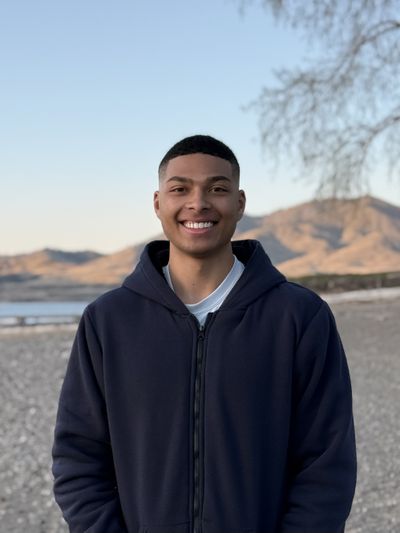
This semester, I experienced and watched other students endure what I never expected to see so openly and repeatedly at Gonzaga University: blatant racism, intimidation, and hostility unfolding one incident after the next. All of this compounded by leadership that moved faster to protect the institution’s image than to protect the students harmed within it.
As a mixed Black, Filipino, and white student, I have watched classmates carry the exhaustion of constantly having to explain, justify, and defend experiences that should already be understood. I have watched students speak honestly about their experience only to face scrutiny, dismissal, or retaliation for daring to name it.
And in moments like these, something corrosive begins to settle into the foundation of a community: the idea that your dignity is conditional, that your pain is valid only when expressed politely, and that your leadership is admirable only when it remains nonthreatening.
No one has to say these things aloud for people to learn them. You teach them when you reward silence over honesty. You teach them when you praise diversity in theory, but recoil from its demands in practice. And you teach them when you celebrate courage only until it challenges your comfort.
You suggest that the problem is not what was said, done, or threatened, but that someone spoke up about it at all.
This is the weight of taking up space.
It is learning that with visibility comes scrutiny. Honesty invites punishment. And authenticity comes at a cost. Staying long enough in spaces that reward your palatability, and you begin sanding down parts of yourself just to fit more comfortably within the room.
That is how institutions diminish people long before they ever break them.
And let’s be honest: this is not unique to Gonzaga. It is the failure of every institution that proclaims values it struggles to embody. It is the failure of every community that markets belonging but resists any kind of accountability.
Mission statements are easy to print. Values are easy to recite. Symbols are easy to display.
The mission statement hangs on the wall in every classroom on this campus. Yet for some students, those same rooms have become places where classmates and professors made them feel smaller beneath the very words meant to affirm their worth.
And too often, the people most capable of helping this campus live out those values are the very ones pushed furthest from the center of the conversation.
Some of the voices this campus most needs to hear from are already here. Qualified individuals with the experience, expertise, and responsibility to help lead this community through moments like these are too often pushed to the margins when their leadership is needed most.
We cannot keep centering the same voices in power and act surprised when students stop believing change is coming. This semester exposed that the people most responsible for defining the culture are often the ones who benefit most from keeping it the same.
Despite everything this semester has revealed, I still believe communities can change. I believe cultures can change. I know people can choose something better than what was modeled before them.
The weight we carry is more than we ever should have been asked to bear. But the weight carried in struggle has a way of making people stronger.
Real change has depended on ordinary people deciding that what exists is not good enough for the people who come next. That is the work before us now. Not patching cracks after each new incident, but rebuilding the foundation itself.
And work like that cannot begin with endless explanations of what is impossible. We have been met with procedures, limitations, and reasons that meaningful action supposedly cannot happen, instead of conversations about what can.
If every moment demanding courage is met with constraints, procedures, and explanations for why change cannot happen, we will continue falling behind the future we see as possible.
Not simply to acknowledge racism when it becomes impossible to ignore, but to build a culture where fewer students experience it in the first place. Not simply to recruit students from different backgrounds, but to create a community where they can exist fully once they arrive. Not simply to ask people to belong here, but to ensure they never have to make themselves smaller in order to remain welcome.
We may never fully benefit from the change we fight for. But that is not the point.
We do this because someone before us carried burdens they should never have had to bear so that we might live more freely than they did. Because someone after us deserves the same from us now.
So we must decide what kind of community we will be.
One that teaches people to become smaller in order to remain welcome.
Or one finally large enough to hold people in the fullness of who they are.
Because belonging should be a source of pride, not proof of perseverance. And no student should have to shrink themselves to survive the very place that promised to help them become more.