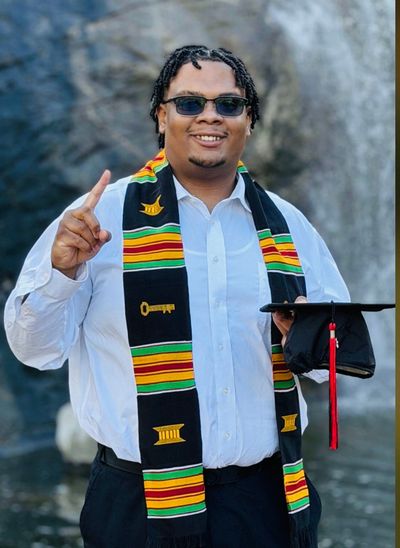
At the inception of this country “no taxation with representation” became a slogan the colonies rallied behind to combat the British Empire. It was something people of that day would say to inspire themselves to change their form of government from a monarchy to a democracy. However, today representation for Americans who look like us still resembles the representation the colonies had in parliament. During my tenure working for the House of Representatives I thought of this often, as there were not many other Black interns for the legislature. It is imperative to not only the state of Washington, but to the entire country for Black and Brown students to be politically active and seeking roles in legislative spaces.
Representation is one of the greatest tools to ensure that the voices of minorities and outcasts are heard, considered, and most importantly valued in political decisions. However, representation is only one reason students of color should seek internships, jobs, and roles within their legislature. Understanding and connection are just as essential for good political policy as representation.
Students of color can understand the lobbyist who articulates the pain of working multiple jobs and having benefits stripped from him. Students of color can understand the constituent email that articulates why health care is so important for the matriarch of their family. Black and Brown students across the nation can connect with those who come from diverse backgrounds and work to share their experiences in a proper political setting. This is due to a multitude of factors and reasons. In my opinion, the greatest factor and biggest common denominator in the area of connecting and understanding others is the fact that students of color are not in the “we” category.
We is a word that is driven by inclusivity, connection, and togetherness. To be a part of the “we” you have to be a visible member of something bigger than yourself. With students of color, and
especially Black students, “us” is a more appropriate term. The word “us” still has some of the fundamental characteristics that “we” gives off, except it is only a portion of the population. More or less “us” segments “we” into different sections and categorizes pieces of the pie instead of the whole collective. Many feel that being segmented into a group that is seen as a sub-sectioned category is a disadvantage. However, in the world of legislation and politics I found this to be untrue.
During my time in Olympia I got to work with many different people from many different backgrounds, countries, and ethnicities. The ones that seemed to be able to connect with others, communicate effectively with a wide range of people, and have empathy for others around them were the ones who did not have the average experience. Many would not consider them a part of the “we” but instead part of the “us”. This is why having students of different backgrounds and ethnicities applying makes the legislature and politics in general better. Because when we allow the “us” to morph into the “we” we create an atmosphere where everyone is heard, represented, and understood. Ultimately that leads to better policies, statutes, and laws, which in turn creates the change in the world that we would all want to see. Therefore, our young students of color must make it a point to get into these spaces and change the dynamics that have allowed us as the American people to be divided, enraged, and non-empathetic 250 years later after the conception of this nation. When the “us” becomes the “we” is when we will all benefit from a democratic system and students who look like me must be the catalyst for that change.