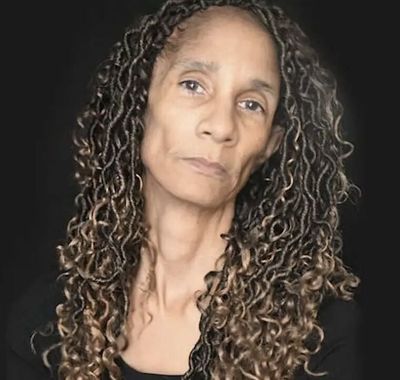
Author Karen Loomis, who writes under the pen name K.A. Gilmore is preparing to release the first book in a three-part series examining race, identity, and the lifelong process of understanding how social messages shape the way people see themselves.The series is titled “Nobody Told Me I Am Black: The Series”. Raised in Spokane after her father retired from the military, Gilmore says it was only later in life that she fully recognized how growing up as one of few Black children in the Pacific Northwest influenced her identity.
In this conversation with The Black Lens, Gilmore discusses Spokane, belonging, George Floyd, identity politics, and why honest conversations about race matter.
Q: Tell us about your connection to Spokane.
K.A. Gilmore: My dad was transferred to Fairchild Air Force Base in 1970 after we had been living in Italy. I was actually born in Moses Lake, so my parents already had a connection to Washington because they had previously been stationed at Larson Air Force Base.
When my dad retired from the Air Force, my parents had the option of deciding where they wanted to retire, and they chose Spokane.
Spokane became a major part of my life and ultimately became a major part of my writing. In fact, Spokane is mentioned more than 200 times in the first book because it’s impossible to tell my story without talking about growing up there.
Q: How did growing up in Spokane shape your understanding of race and identity?
K.A. Gilmore: I grew up in what I call “the land of one percent.” There just weren’t many Black people. The people who looked like us were us, or athletes we saw on television. Those were the only connections I really had.
My older siblings all left Spokane as soon as they could. Looking back, there was definitely an exodus. They wanted out.
My parents didn’t really see a problem because my mom grew up in Sacramento, where all of her extended family lived. I realized later how different our experiences were. We had us—and nobody ever came to visit unless someone died. We were isolated.
I also realized we were raised during a time when the message was, “Don’t you dare pull the race card.” If something happened, you weren’t supposed to attribute it to racism. You were expected to move on.
Q: What inspired you to write this series?
K.A. Gilmore: I never wanted to write a marketing book. I thought, “Who wants another book about marketing?”
Instead, I started writing from emotion.
I had finished teaching for the summer and gave myself eight weeks to write. I didn’t use an outline. I just wrote until I was done.
As I kept writing, I realized I wasn’t just writing about racism. I was writing about where our beliefs come from, family, experiences, society, and how those beliefs shape us.
The original manuscript became three books because there was simply too much to say.
The first book sets the stage. The second examines institutions and policies. The third explores the impact those systems have had on my own life.
Q: You speak about realizing you weren’t seeing yourself reflected in the spaces around you. When did that awareness begin?
K.A. Gilmore: Social media changed everything for me.
One of the beautiful things about social media is that it exposed me to conversations I never knew existed.
I remember talking with someone from North Carolina about Historically Black Colleges and Universities. She asked me, “How do you not know about HBCUs?”
I said, “I grew up in Spokane, Washington.”
There wasn’t an HBCU anywhere around me. There wasn’t anyone talking about them.
That’s when I realized there were entire conversations happening in Black communities that I had never been exposed to because of where I grew up.
Q: You discuss the social messaging surrounding Black identity. What messages were you receiving growing up?
K.A. Gilmore: The mindset when you’re raised in predominantly white communities is that, if you’re Black, you’re somehow less than.
You don’t necessarily hear those exact words, but that’s the messaging.
That’s why my books begin in the 1950s and move through the Civil Rights era into today. I wanted to understand where those messages came from.
I also realized how easily we inherit our parents’ beliefs without ever questioning them.
When I researched Carl Maxey and other historical figures, I began examining not only history but also the beliefs I had absorbed growing up.
Today we have access to information that allows us to challenge those beliefs—if we’re willing to.
Q: When did you fully recognize your own Black identity?
K.A. Gilmore: George Floyd.
That was the moment.
Before George Floyd, I honestly believed that if I became the most educated, had the strongest credentials, worked the hardest, became the best athlete, and spoke eloquently, my skin color wouldn’t matter.
I thought excellence would erase race.
That was my reality.
I always felt different, but I didn’t have language for it.
We weren’t allowed to put words behind it.
Q: You also talk about desirability politics and belonging. Can you explain that?
K.A. Gilmore: I understood very early how you were expected to behave, even though I didn’t know what code-switching was.
I wasn’t someone who stood up for myself when racism happened because most of the time we were left alone to deal with it.
Inside, though, you know.
You know you’re not being evaluated solely on your accomplishments.
You know you have to do more just to be considered.
I saw it in sports. I saw it in school. I understood the politics of desirability even if I didn’t have those words at the time.
Over the years I became internally motivated rather than seeking external validation because I realized that approval wasn’t something I could control.
Q: What do you ultimately hope readers take away from this series?
K.A. Gilmore: I want us to have honest conversations about race without people feeling pressured or defensive.
That’s what these books are supposed to do.
They’re meant to start conversations where people can disagree, think, reflect, and come back saying, “Let me think about that.”
That’s the conversation I hope we continue having.
Learn more here: https://www.nobodytoldmeiamblack.com