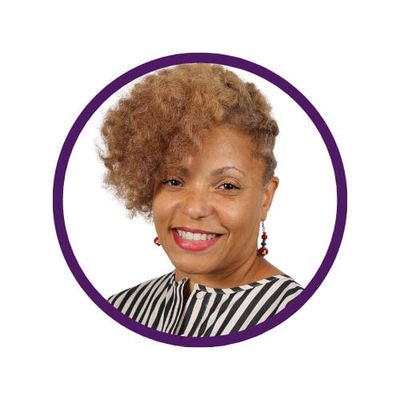
“Success is to be measured not so much by the position one has reached in life as by the obstacles which [she] has overcome.” ~ Booker T. Washington
My grandmothers were born in Arkansas 1913 and 1918, respectively. They came of age during an era that demanded Black people prove their humanity through respectability politics, while simultaneously stripping the men of their political power, economic opportunity, and basic rights. Women were still considered property. They rarely spoke about the forces that shaped their lives. They did not tell me stories about how they attended school when it was considered frivolous for them. I didn’t hear stories about them falling in love and getting married. As we reflect on the meaning of Juneteenth beyond the month of June, I don’t recall hearing about the community Jubilee Day celebrations they attended each January 1st (the precursor to Juneteenth). They did not tell me much about their lives in Arkansas. What they taught me was much more simple.
Go and show up.
They taught me that being a girl did not excuse me from responsibility. If there was work to be done, do it. If something needs to be challenged, challenge it. If someone needs help, help! Leadership was never described as influence, authority, or position. Leadership is responsibility.
Growing up in an all-Black community (redlined district) reinforced that lesson. The adults around me affirmed me, corrected me and held me accountable. They expected me to contribute to something larger than myself. I learned early that my life belonged not only to me, but also to the community that invested in me. The people who poured wisdom, time, and care into my development made me responsible to them.
Stewardship in the Face of Healthcare Inequity
That understanding continues to inform how I lead today. While I co-lead a state-wide health justice organization, leadership still feels less like authority and more like stewardship. The communities we serve are not abstract stakeholders; they are the people to whom we should feel accountable. They are the reason I show up.
In health justice, accountability means looking directly at the gaping wounds of systemic inequity.
When we talk about “access to care,” we aren’t just talking about insurance cards or hospital buildings; we are talking about whether a Black mother is heard when she says she is in pain, or whether a neighborhood is systematically starved of grocery stores or fresh fruits and vegetables or clean air can access true wellness.
The state-wide inequities we fight are not accidental; they are the modern iterations of the same redlining that shaped my childhood. Leading a state-wide organization means refusing to let inequities be sanitized by the current federal administration or corporate jargon. It means demanding that our health care systems recognize health as a fundamental human right, not a luxury reserved for the privileged.
The Reality of the Room
That sense of responsibility travels with me into every room I enter. Often, I find myself in UNSAFE spaces, being the only Black woman in the room or at the table. Sometimes I see the surprise on people’s faces when they see me enter their spaces. After I prove again why I’m included in the discussion, the room falls noticeably silent or I feel a requirement to defend my knowledge.
Earlier in my career, I interpreted those moments as evidence of my need to study and learn more. Over time, I noticed something else: I kept getting invited back. The silence may have been the disruption that occurs when a perspective that has not been fully considered enters the room. Now, when I enter rooms or find my seat at tables, I look for opportunities to offer alternate perspectives than what’s being discussed to include experiences rarely requested.
The Trifecta of Leadership: Giving, Asking, and Owning
Through this journey, I have come to understand that leadership is sustained by a delicate, powerful trifecta: what we give, what we ask, and what we own.
Giving comes naturally to Black women: we have historically poured out labor, our wisdom, and our emotional bandwidth to keep communities afloat. But I have learned that giving must be intentional, not sacrificial.
Asking is where the friction often lies. Society expects us to be resilient and silent, but true stewardship requires asking for what our communities actually need – demanding resources, capital,and institutional changes without apology.
Owning is the final piece. I have had to learn to own my space, my expertise, and my authority. I no longer wait for permission to lead. I own the reality that my voice belongs at the table, not as a tokenized inclusion, but as a rightful architect of our collective future.
Freedom and gratitude
It’s been about 100 years ago when my grandmothers celebrated Jubilee Day. Where they attended community picnics, cheering local performers, barbecues, baseball games, rodeos and traditional strawberry soda. Because I know them, I know they found ways to serve the community. They showed up. They asked what was needed. They gave from what they had. And they worked collaboratively to help create the kind of community they wanted to live in.
As we honor the history of delayed freedom for enslaved Americans in June to the fervor of America’s 250th year as an independent nation (precluding our Black ancestors) in July, the word freedom carries a heavy, complex weight. We celebrate the survival, the legacy and the culture of our people. Yet, we cannot ignore the cultural backlash, the rolling back of civil rights, and the ongoing exhaustion of fighting the same battles our ancestors fought.
How do I hold gratitude in times like these? I hold it by looking backwards and forward at the same time. I am deeply grateful for the broad shoulders of the grandmothers who paved the way for me to co-lead a state-wide organization. My gratitude is not passive compliance; it is a fierce, active energy. It is the fuel that allows me to stand in unsafe rooms and demand better for the next generation.
Ubuntu
“Ubuntu” An ancient African proverb translated: I am because you are. Leadership is responsibility to the people or the community you serve. Being a Black woman who gets dismissed because I’m female, ignored because I’m Black, or perceived as having nothing of consequence to contribute, it must happen to others who are also perceived to be undeserving of time, consideration and humanity.
The experiences I have and assume others may have had explicitly shape how I carry out my leadership responsibilities. Offering experiences and wisdom from my people in homogenous spaces, and en