What does it mean to use your voice, your body, your presence, your craft, as a form of resistance?
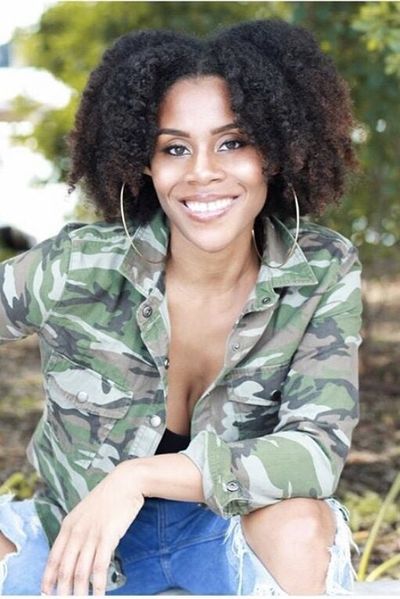
The Black Lens was honored to be in conversation with Martina Sykes, the actress portraying Shenzi, one of the spotted hyenas in the Broadway production of “The Lion King,” which came to the First Interstate Center for the Arts in February, to explore art as activism, representation and the power of storytelling. Through Shenzi’s unapologetic presence, we discuss how performance holds the power not only to entertain, but to analyze, disrupt, teach and challenge.
In hard seasons, art becomes a language of resistance, a bridge between pain and possibility. Art activism is how artists carry messages of justice through story, sound, movement, and character, reaching people who may never read a policy brief or attend a speech. Artists, in this sense, are stewards of the times, using their gifts to reflect truth, lift burdens, and help communities imagine a more humane world. In doing so, the journey toward individual purpose and collective destiny becomes empowered.
Be inspired by the interview below.
Q: Martina, can you tell me a little bit about yourself? Who is Martina? When did you decide you wanted to go into theater? Where are you from? What inspires you?
Martina: Well, I’m originally from St. Petersburg, Florida. I’m a pastor’s kid, so I grew up in church singing and dancing. My mom can sing. My dad can sing. They both play instruments. So we just grew up singing and dancing. Any local play that was going on in the community–whether it was the Black history pageant or The Chocolate Nutcracker–we were involved in.
It sparked my love for singing and dancing early, but it was always rooted in church or Black history–based and cultural settings, which I loved. I went to an arts program for elementary, middle, and high school. I’m one of four siblings, and my brother–who I’m closest to in age, about two and a half years apart, is also a Broadway actor. We grew up around a lot of music.
When I went to college, I actually studied public relations. But in my last month of college, my brother called me and said, “I think you’re sitting on your gift. I feel like God has something else for you. I want you to come to New York and audition for Broadway.”
I told him, “No, I’m not doing that. I don’t have enough money to be in New York just gallivanting in the streets.” He said, “No, no, no. I’ll show you how everything works. Just come for six months.” He called me every day until my graduation.
So when I graduated, I thought, “Okay, let me see.” He said, “If it doesn’t work out in six months, you can go back home.” I went, and within the first two weeks, I booked a Broadway workshop. After that, things came in slowly, regional gigs, a theme park, a cruise ship. My first big job was Motown: The Musical on the national tour, then on Broadway. The following year, in 2017, I booked The Lion King, and I’ve been with it ever since.
Q: When you think of the phrase “art as activism,” what does that mean to you as a Broadway performer?
Martina: As a Broadway performer, I think of it as using art as a form of resistance. Music and art are universal languages. When I think about the Civil Rights Movement, I think about the music of that time.
When my brother did Ain’t Too Proud, he met Congressman John Lewis. He talked about how the movement then had a soundtrack that made it global. Today, we have social media amplifying movements like Black Lives Matter, but back then, they had music–songs like “What’s Going On,” “Ball of Confusion,” “War,” and “A Change Is Gonna Come.”
Artists were meeting with President Kennedy and Robert Kennedy, advocating for change in real time. Lena Horne, James Baldwin, Harry Belafonte, Sidney Poitier, Aretha Franklin–the list goes on. These were people who stood for their rights and the rights of Black people through their art.
Artivism–where activism meets art–reaches people differently. Sometimes people can digest a song or a dance more easily than a speech. When you use your gifts to speak about what matters to your community, or to humanity as a whole, the message travels further.
Q: Let’s talk about Shenzi. Many audiences see her as a villain, but also as a figure of survival and resistance. How do you interpret her role?
Martina: I’ve never seen her as a villain. There was no original plot to do wrong. When the kids come into the elephant graveyard, we’re animals. Spotted hyenas live on the outskirts. We’re not part of Pride Land or the food chain. Sometimes we go two or three weeks without eating.
We didn’t plot to steal anyone’s kids. These were free meals walking around. If you haven’t eaten in weeks, what do you think is going to happen?
We join Scar for survival. He promises food: “Stick with me, you’ll never go hungry again.” That’s all we’re thinking about–where the next meal comes from. When we realize the promise won’t be fulfilled and that we’re being blamed, we take care of the problem.
I personally think we helped restore the Pride Lands to its rightful order. Simba couldn’t kill his uncle on that rock. We took care of that.
Shenzi herself reflects nature. Female spotted hyenas are the strongest. She’s a strong woman–fierce, funny, protective. She has her own objectives and circumstances. One of the powerful things about The Lion King is that the female characters are strong and drive the story.
Q: You mentioned “restoring rightful order.” What does justice mean to you?
Martina: I think of restorative justice–righting wrongs, restoring humanity and dignity. Not just punishment, but restoration.
Justice might mean a conviction, but restorative justice asks: What does healing look like for those harmed? You don’t skim past history and say, “Slavery happened, let it go.” You address it. You tell the truth. You apologize.
What does restoration look like? Is it reparations? Is it restoring places like Tulsa and supporting survivors and their descendants so they can rebuild? Justice has to include healing.
Q: If Shenzi could speak directly to today’s world, what would she say?
Martina: When it was time for the lions to fight, the hyenas let them fight. Minorities have been fighting for generations. Now it’s time for others to fight too, because everyone’s rights are being infringed upon.
Those who have been asleep–it’s time to wake up. Not everyone has to be on the front lines. Some people make the calls, secure lawyers, organize resources. Roles need to be reimagined, but everyone has a role.
Take your rest if needed, but stay active–through education, bridging gaps, or organizing. And for those who’ve been silent, it’s time.
Q: What is the power of representation in the arts? Is it just entertainment?
Martina: Representation is everything. Someone is always watching, wondering if they can do what you’re doing. My first Broadway show was Sarafina! Seeing Black excellence on stage mattered.
It’s also important to see us behind the scenes–in sound, hair, makeup, stage management, company management. People don’t know those jobs exist. Representation expands possibility.
Being Black and doing what we love on this level carries responsibility. We reflect excellence, but we also give back. My brother and I started the Sykes Kids Scholarship for seniors at our high school because our community poured into us. When you do it, you reach back.
Q: Is there anything you want to leave us with?
Martina: The responsibility of an artist is to reflect the times and be a beacon during turmoil. You may not know the impact in real time.
I met someone who went through 11 rounds of chemo just to live long enough to see The Lion King. Someone told me they watched “Circle of Life,” looked at their daughter, and said, “I can go now.” They entered hospice and passed a week later.
People skip bills to bring their kids. For some, you are their escape. Your job is to lift the weight off their shoulders–even if only for a few hours. That is the responsibility.