This article is dedicated to the power of Sankofa. Sankofa is a Ghanaian concept depicted by a bird moving forward with its head turned back with an egg in its beak. The egg symbolizes the good of the past, meaning “It is not wrong to go back for that which you have forgotten.” It’s about bringing the best of our past forward in order to help us navigate the here and now. What wisdom could we bring forward from when we lived under the age of separate but equal laws?
Like some of you, I came of age during those days, the days of legalized segregation, and I felt its sting on a regular basis. The “Jim Crow” era was in full-swing in the 50s and 60s in my hometown and across the country. Although my home state fought for the North during the Civil War, it was and still is politically and culturally southern and racist.
We lived in predominantly black neighborhoods, went to black only schools, attended black churches, owned our own businesses, owned and managed our own night spots. When we died, we were buried in a black only cemetery. However, there was a level of black unity back then regardless of one’s personal or political views. The law forced our collective hand. Our response was to stay hopeful and to be united in the face of segregation laws.
During the “Jim Crow” era, if you were black, you knew where you stood. There were physical reminders posted on businesses, water fountains, buses, trains, bathrooms and night spots that made it clear that our kind wasn’t welcome. Experience taught you to pick your battles wisely and your guard was always up when you left the comfort of your neighborhood.
In Spokane, the color of our skin encouraged us to develop caring and supporting relationships. Black Spokanites lived as neighbors, churched together, raised their children together, created self-improvement support groups and organizations, and created businesses together.
I recently reread Dwayne Mack’s 2014 book, Black Spokane: The civil rights struggle in the Inland Northwest, and Jerrelene Williamson and the Northwest Black Pioneers’ African Americans in Spokane published in 2010. I was particularly interested in what they had to say about early black owned businesses and other ways black Spokanites were supportive of one another and creative in their response to “Jim Crow.”
According to Mack and Williamson, black folks owned stand-alone brick and mortar businesses while others had storefront offices in the heart of the city as early as 1883. I focused on those businesses, social clubs and organizations from the late 1800s to the late 1960s. Their names sent a strong black message. There was the Harlem Club, the Ebony Café, the George Washington Carver USO Club, the Porters and Waiters’ Club, and the Booker T. Washington Center.
The Poodle Café opened here in 1883. It was owned by Oliver (“Ollie”) Williams, and was located at 514 Front Ave. (now Spokane Falls Boulevard). In 1929 the Pirates Den, later called the Harlem Club was owned by E.J. Brown, and opened on Fancher Road and Sprague. According to Williamson, it served and entertained white folks only during its regular business hours. Black folks could only come in on Sunday nights, sometimes Monday nights after they were officially closed.
Many smaller restaurants and cafés followed. Notable examples are Sam’s Pit owned by Sam Willis, the Willow Inn owned by Walter Derrick, Virgil’s Chicken Shack owned by Virgil Sexton, the Ebony Café owned by Frank Hopkins, the Golden Bird owned by Tommy Rutledge, the O’Neil Vincent Resturant, the Lil’ Bit of Philly owned by James Whitsett, and Happy’s Soul Food Restaurant and Barbeque owned by the late Rev. Happy Watkins and wife Etta.
There was a United Service Organization (USO) downtown in 1941–unfortunately it only supported white service members. In 1945 the George Washington Carver GWCUSO Club opened, named after one of our country’s most famous black educators, a scientist and inventor, at 101 South Division Street providing a “home away from home” and social spot for black troops. There was also the Booker T. Washington Center, named after the black self-help advocate and first president of Tuskegee University.
In 1948 Clarence Freeman and his wife Frances opened the Merlin Apartments at 29 W. Second Ave. between Division and Brown. They began renting to black military personnel who could not lease elsewhere in town. They also owned the Freeman Laundry and Grocery Store on Third Ave. Mike’s Grocery was owned by Mike A. Stephens and was located at 421 S. Cowley.
There were many cultural and intellectual opportunities offered by such groups like the Wednesday Art Club, the Phillis Wheatley Club named after our country’s first black published poet, and the Dunbar Literary Club, named after Paul Laurance Dunbar, another pioneering black poet, novelist, and playwright. The Ashanti Club was active. Ashanti is derived from asante, meaning “thank you” and refers to a people of south-central Ghana. The Pierian Club inspired poetic inspiration and knowledge.
Other organizations devoted to the enrichment of black residents included the Crest Club (an affiliate of the YWCA), Links Inc, Eastern Star, and Prince Hall Grand Masonic Lodge. The Men’s Philanthropic and Social Club planned entertainment and social functions for the black community. The Spokane chapter of the NAACP was established here in 1923. The Spokane’s Colored Businessmen Improvement Club had its beginnings in 1911, as did this very newspaper known as the Citizen, published by Charles Barrow.
“Jim Crow” laws forced our hand during those years of social and economic scarcity. The law forced us to open our own businesses, social clubs and organizations–all born out of necessity. Being denied forced us to take care of our own in a way we have forgotten or never learned. We were at our best back then at recognizing a need and filling it–at valuing relationships over convenience.
We need the wisdom of the Sankofa bird—valuing the wisdom of our past that we have forgotten or never known and bring it forward to help us navigate the hard times of our here and now.
Footnote: According to Williamson 2010, in 1969 Spokane had a Black Shoppers Guide because some black citizens were disturbed by the “complacency and indifference” of many residences in town.
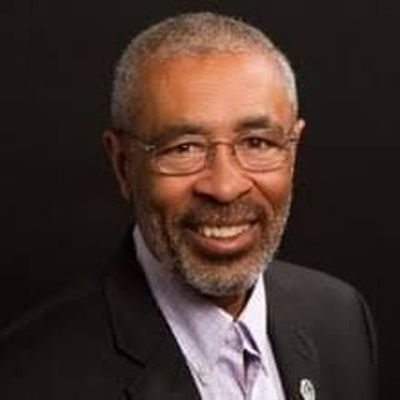
Dr. Bartlett is a retired educator. He retired from Gonzaga University in 2007 and Eastern Washington University in 2020.