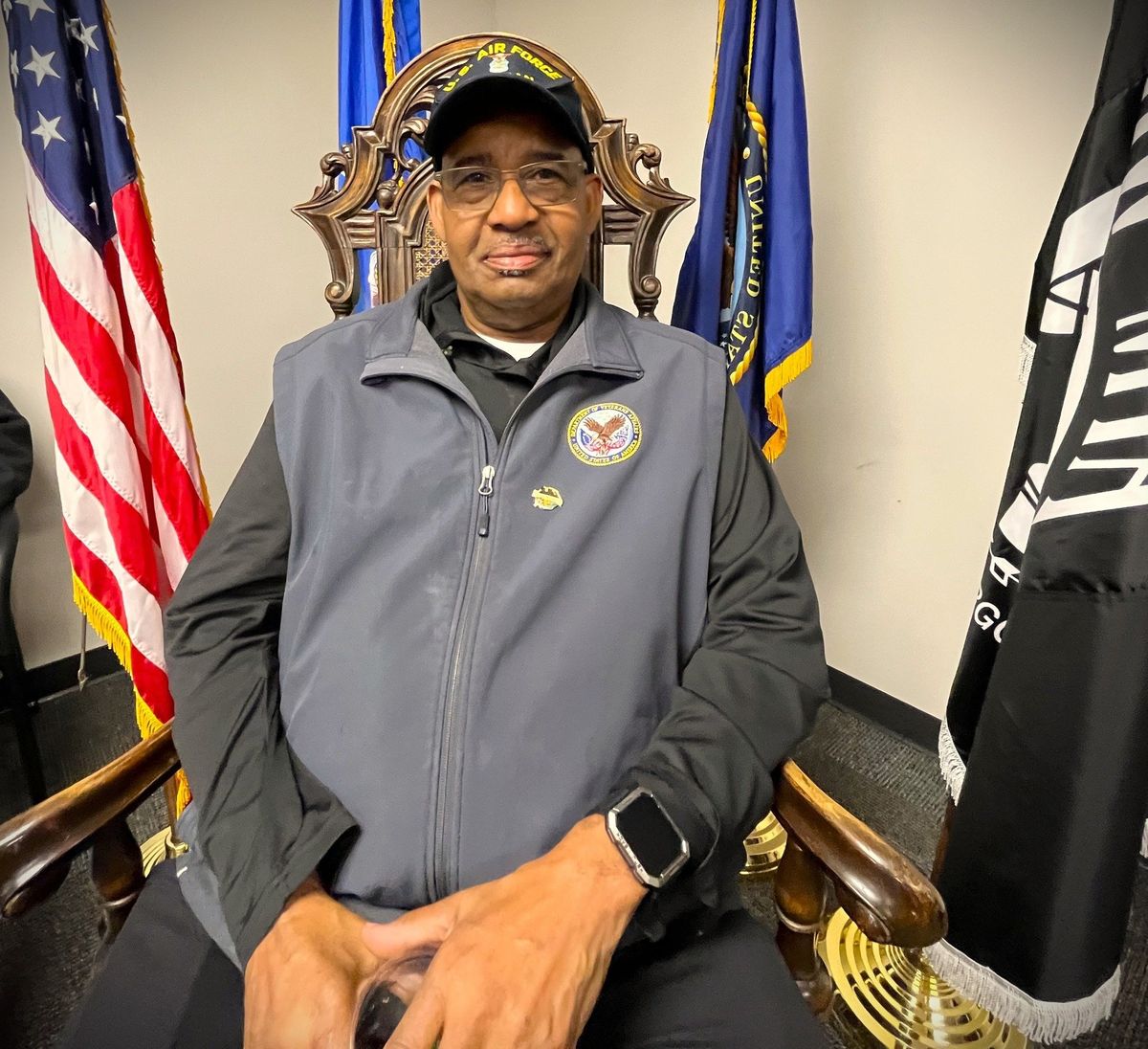
Bennett Traylor, known to almost everyone as “Trey,” does not describe his life in titles. He describes it in duty.
A retired U.S. Air Force veteran of more than 20 years and a longtime VA benefits advisor, Traylor has spent decades doing what institutions often fail to do: slowing down, explaining the process, and making sure people are not left behind. In the hallways of the Mann-Grandstaff VA Medical Center, colleagues and veterans alike know him by another moniker, “the Mayor of the VA.” It’s not an exaggeration. It’s recognition.
“I don’t believe in not helping,” Traylor said. “Even when people are angry. Even when they don’t trust you yet.”
A Life Shaped by Service
Traylor entered the Air Force in 1972 and served until 1992, beginning in aircraft maintenance before being reassigned due to an allergy to jet fuel. His service took him across the globe, Vietnam, Thailand, Guam, and into the realities of war that few civilians truly understand.
He and wife Brenda married in 1975 and now together for half a century, moved wherever the military sent them. Spokane became their final duty station in 1987, though it was not an easy transition.
“We didn’t like Spokane when we first got here,” Traylor admits. “Culturally, it was hard. Very hard.”
What kept them rooted was not comfort, but calling. Mentors from the local Black church community told them plainly: This is why you’re here.
From Veteran to Advocate
When Traylor left active duty, adapting to civilian life was a new frontier.
“Nobody told me anything. Nobody explained the VA. Nobody showed me how it worked.”
That absence became his mission.
As a VA Health Benefits Advisor, Traylor became the person veterans turned to when systems failed them, especially Black, Native American, and other veterans of color who had learned, often through experience, not to trust institutions.
He didn’t just give answers. He translated systems.
“You can’t go from A to Z with the VA,” he explains. “You have to go A, B, C, D. It’s a process, and nobody explains that.”
For many veterans, particularly elders, that explanation makes the difference between decades of lost benefits and long-overdue recognition.
‘The Mayor of the VA’
The nickname came from a reporter some years ago, but it stuck because it was true. Traylor didn’t stay behind a desk. He walked the floor. He went to events. He spoke at cultural community events, congressional forums, and town halls across Washington, Idaho, and Montana.
Veterans came to him because he listened.
“I look at them like they’re my father. My grandfather. Somebody’s parent who needs help.”
That framing, people over processes, is what set him apart.
He helped veterans uncover service-connected injuries they didn’t even realize counted: hearing loss, chronic pain, trauma carried quietly for decades. He helped them understand disability benefits are not charity. They are earned.
“Disability isn’t just about you,” he says. “It helps your family in the long run.”
Breaking Bias Inside the System
Traylor is candid about the double standards veterans of color face.
“At first, yes, there was bias. A lot of it came from not taking the time to explain.”
Bias, he says, often shows up as impatience. As dismissal. As paperwork handed over without context.
His solution was simple but radical: time.
“Once you take time, things change. Veterans will talk. They need to talk.”
That listening, he believes, is part of healing.
What Civilians Get Wrong
One of the hardest parts of Traylor’s work has been confronting civilian misunderstandings of military service, especially around trauma.
“People ask questions they shouldn’t ask,” he says, recalling a veteran who was triggered by being asked if he’d ever killed someone.
Veterans, he explains, often carry their pain quietly, especially those from Vietnam and earlier wars, who were never given space to process what they survived.
“Some of them burned their uniforms. Never talked about it again.”
Patriotism, Reclaimed
For Traylor, patriotism is not a slogan. It is sacrifice, and Black Americans have paid that price since the nation’s founding. We reflected during the interview on how patriotism and the ideals of liberty resonate differently for Black soldiers. From the Revolutionary War to the Buffalo Soldiers, from segregated tank battalions in World War II to today’s service members, Black veterans have defended freedoms they themselves were often denied. That sacrifice is not one that he tucks away in the back of his mind.
“If it wasn’t for veterans, Black, white, Native, everybody, you wouldn’t be able to say what you say, protest how you protest, or live how you live.”
Representation Beyond Election Season
Traylor is clear-eyed about politics. Policymakers, he says, often remember veterans only during election cycles.
“They should be there all the time. Not just when they need votes.”
He believes every congressional office should have visible, community-embedded veteran advocates, people veterans know by name.
“You can’t wait for people to come to you,” he says. “You have to walk the room.”
The Legacy He Leaves
As Traylor enters his second retirement from the VA, the question of legacy lingers, not for him, but for the people he’s helped.
What does he want to be remembered for?
He doesn’t hesitate. “Caring about people.”
He gave up evenings. Family time. Quiet hours. He stayed late until the last veteran was called back, the last question answered.
“I see myself as a light,” he says softly. “Holding the door open.”
And because of that light, countless veterans, especially those long overlooked, have finally been able to walk through.