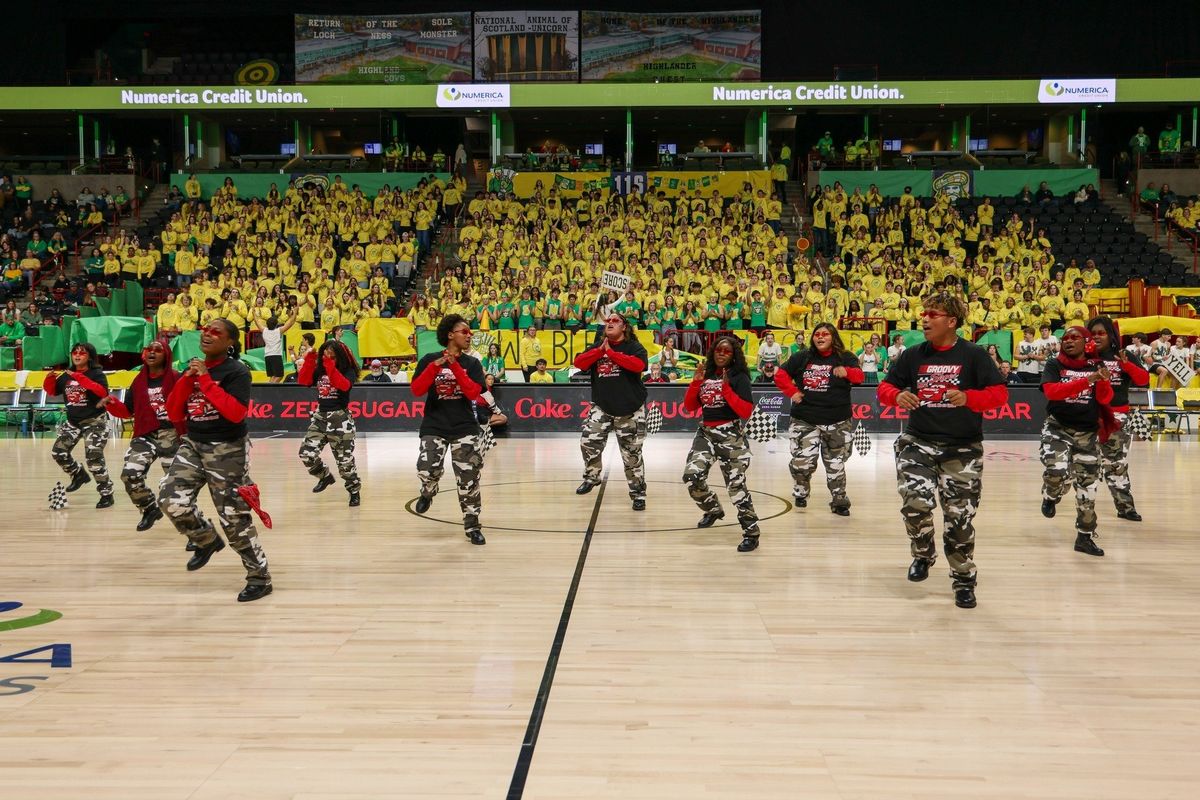
Art doesn’t always whisper. Sometimes it stomps, snaps, and speaks back.
This year’s Black Voices Symposium theme, “Art as Activism: Seasons & Cycles – Finding Destiny,” asks us to consider creativity not just as expression, but as resistance, healing, and transformation. Through stepping, spoken word, movement, and collective rhythm, young people are learning how to name their seasons, break harmful cycles, and step boldly toward purpose.
In this Q&A, I reflect on my journey–from standing in formation as a stepper to leading from the front as a coach–and how stepping has shaped my understanding of voice, sisterhood, and destiny.
You once stood in formation as a stepper, and now you stand as a coach. How has that transition shaped the way you understand art as activism, and how has stepping helped you use your voice–both on and off the floor–to advocate for yourself and others?
I’ve always had a burning passion for stepping, but becoming a coach has made that passion burn even brighter. Standing in formation as a stepper taught me discipline, unity, and expression. Stepping into a coaching role helped me understand that every snap, clap, stomp, and shout isn’t just for performance–it’s intentional. It’s storytelling. It’s legacy.
Stepping has always been more than an art form to me; it’s a cultural language rooted in resilience, history, and collective power. Coaching has shown me how that language can be used as activism–how movement can create space for voices that are often overlooked. I’ve always been outspoken, but I haven’t always been heard. Being on a step team created space for me to be heard, and now I’m committed to creating that same space for the youth I coach.
Through stepping, young people learn that their voices matter. They learn that when they unite–when they move, speak, and stand together–they have the power to create change. My goal is to help them understand that they’re part of something bigger than themselves, connected to a cultural legacy and supported by a step family that believes in them. On and off the floor, stepping has become a tool for confidence, advocacy, and community impact, and I’m proud to pass that forward.
Stepping is rooted in rhythm, boldness, and collective power. In what ways do you see step as a form of artistic protest or storytelling that challenges stereotypes and pushes for justice and visibility for Black young women?
Step is beautiful, and we use it intentionally. Our chants are affirmations–spoken out loud for our students and our audiences–reminding them of their worth, their strength, and their belonging. Our steps invite others to unite as one, creating a shared rhythm where joy, pride, and purpose collide. Through stories drawn from real experiences, people don’t just watch; they connect. They see themselves.
Stepping also challenges harmful stereotypes placed on Black youth. Black women are often labeled as angry or aggressive, while Black men are too often expected to be strong without vulnerability. There’s a dangerous narrative that we’re supposed to do everything alone–that needing help is weakness. Stepping pushes back against that. It shows discipline with softness, power with care, and boldness with unity.
This program teaches our youth that everybody needs somebody. Stepping is loud, but it’s also deeply communal. No one carries the rhythm alone. Every stomp depends on another body, another voice, another heartbeat in sync. Through that process, young people learn that community is not a weakness–it’s a strength.
The theme this year is “Seasons and Cycles: Finding Destiny.” How do you see the different seasons of your life–student, graduate, young adult, and now coach–reflected in the way you lead, and how does stepping help young women navigate change and growth?
I was a challenging student. I lacked many of the fundamentals people might think a leader needs. I got into trouble at school and faced struggles at home. Being the oldest came with pressure to set the example, but a lot of the time, I didn’t have one for myself.
My coaches weren’t just coaches–they became my aunties, mentors, therapists, business consultants, sisters to cry with. They didn’t just teach me stepping; they taught me life. They showed up in every season. If they didn’t have the resources, they knew someone who did. They brought food to my house, held me when I cried, and guided me toward success.
After high school, I dropped out of college. Soon after, I was asked to coach the step team. It was exactly what I needed at the exact time I needed it. It helped me dream again and reminded me that my story could help someone else survive theirs.
Now I understand that every season of my life was intentional. Each one prepared me to connect with students who need me most. I get to share my experiences, nurture their dreams, and push them to see more for themselves–just like my coaches did for me.
Sisterhood is at the heart of step. How does collaboration within the team teach young women about unity, accountability, and collective advocacy, especially in a world that often tries to silence or fragment Black girls?
Sisterhood is the heart of step.
High school can be messy–cliques, drama, personalities that clash. I once almost fought a girl over something ridiculous. Years later, she joined the step team, and I thought, oh no, here we go again.
At first, we were just polite. Then she disappeared from practice and school for almost a month. When she returned, I was assigned to teach her everything she missed. As we practiced, she opened up about what was happening at home. In that moment, I saw my own pain reflected in hers.
That’s when the magic of step showed up.
We grew close. She’s now my sister in every sense. We graduated together, travel together, and talk every day. Step didn’t just save us from hallway fights–it gave us a lifetime of support.
On the floor, every clap and stomp depends on someone else. You learn unity, accountability and how lifting each other up makes everyone stronger. In a world that tries to silence Black girls, step reminds them they are seen, heard and never alone.
Art as activism begins within. What lessons do you hope your team takes from stepping about confidence, self-worth, and purpose–and how do you see step helping them move toward their destiny with courage and intention?
I hope my team understands that they are loved, they are heard, and there is only one of them–so be the best version of yourself. Stepping teaches confidence, self-worth, and purpose. It shows us that anything is possible when we believe in ourselves and have the support of our family.
Even in hard times, you matter. You will always have people to rely on.
To my seniors especially: step doesn’t end here. Carry these lessons into every chapter of your life. Teach them to others. Build your legacy. Own your power, live with intention, and make your mark.
That’s finding destiny–one step at a time.