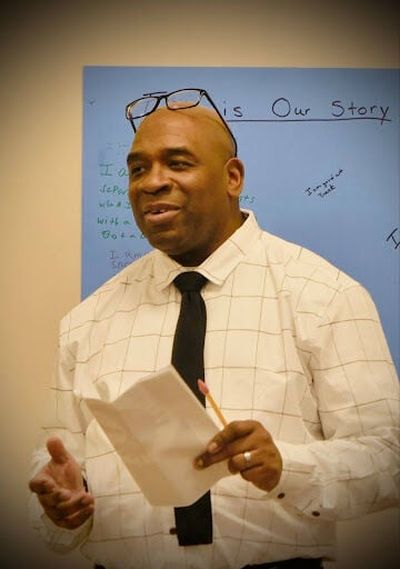
Editor’s Note: Violence prevention is not only about interrupting conflict after it begins. It is also about creating spaces where people feel safe enough to speak, be heard, and be understood. Unresolved pain, suppressed emotions, and the fear of expressing ourselves can quietly erode relationships and communities. Healthy communication is an essential part of healing, restoration, and preventing harm before it occurs. In this reflection, James Alexander reminds us that finding the courage to give voice to our unspoken words is often the first step toward peace.
Words are powerful. They create environments. They can make us feel a certain way or make others feel a certain way. Words, when expressed, can be beautiful and destructive at the same time. But when the words that need to be spoken are stuffed away because of past experiences, because we’ve been dismissed, because the person receiving them did not value what we were saying, or because we were rejected and lost people we cared about, something begins to happen within us.
We start believing that what we have to say is not important, or that what we have to say is not worth saying. So we begin holding those words in, refraining from speaking about the very things that need to be spoken. We begin questioning ourselves and our ability to communicate. We replay the “what ifs,” analyzing every action and every word from the other person. That constant internal conversation weighs heavily on our minds and our hearts.
Eventually, it places stress not only on us but also on the relationships we are trying to build. Our relationships begin to grow shallow because we stop sharing what needs to be shared with the people we love and those we are in relationship with. As a result, we slowly withdraw from the very people we care about most.
Those words need a place to go. They have purpose. They have life. But until we find the courage and strength to release them, they become stale. They become stagnant. And we know that when things sit too long without movement, they become toxic.
Every time we feel like we have an opportunity to say something, fear steps in and says, “No, they don’t want to hear it,” or, “No, that’s not important.” The battle within is real. The people around you may never know it, but you’re constantly fighting with yourself over how to express what needs to be said. The uncertainty and the unresolved conversations replay over and over in your mind until they begin affecting both your mental and physical health.
Sometimes it shows up as resentment toward yourself for not speaking up. Sometimes you wish the situation had never happened, even though you know you can’t change it now. Physically, you’re drained from the stress. Your cortisol levels rise. Your blood pressure increases. The weight begins to show itself in ways you never expected.
So what can we do?
Find someone you trust to talk to. Write those thoughts down. Most importantly, remember that we have Jesus, who tells us to cast our cares on Him. Speaking those things out in prayer releases the emotions attached to those situations. An important part of that process is naming the emotions while you’re doing it. That is where healing begins. The words have finally been released, and the weight begins to lift.
This is especially true when you’ve lost someone you loved and realize there was still so much left unsaid. Or maybe you’re in a relationship that you genuinely want to work. The words you’ve been holding back may be the very words that move your relationship forward.
Restoration is key. Allow the people who love you to help carry the burden. Together, you can work through it.
I’ll leave you with this: Say the things that need to be said, but say them with love and kindness. Resolve what needs to be resolved. Most importantly, love yourself and take care of yourself.
You are more than a conqueror, and the victory is truly yours.