In the last article, I closed with this question:
“So what happens when you take a bunch of individual, collective, and generational trauma (retention), leave it unresolved, pile some really brutal racial trauma on top of it, and then cut that person—or those people—loose in a society that favors whiteness, classism, capitalism, overt and covert racism, kind of just does dehumanization as one of its side gigs, and also operates with the basic human function of implicit or unconscious bias?”
I know that’s a big question, and we won’t answer all of it in these writings. But it’s a start, so let’s keep working it.
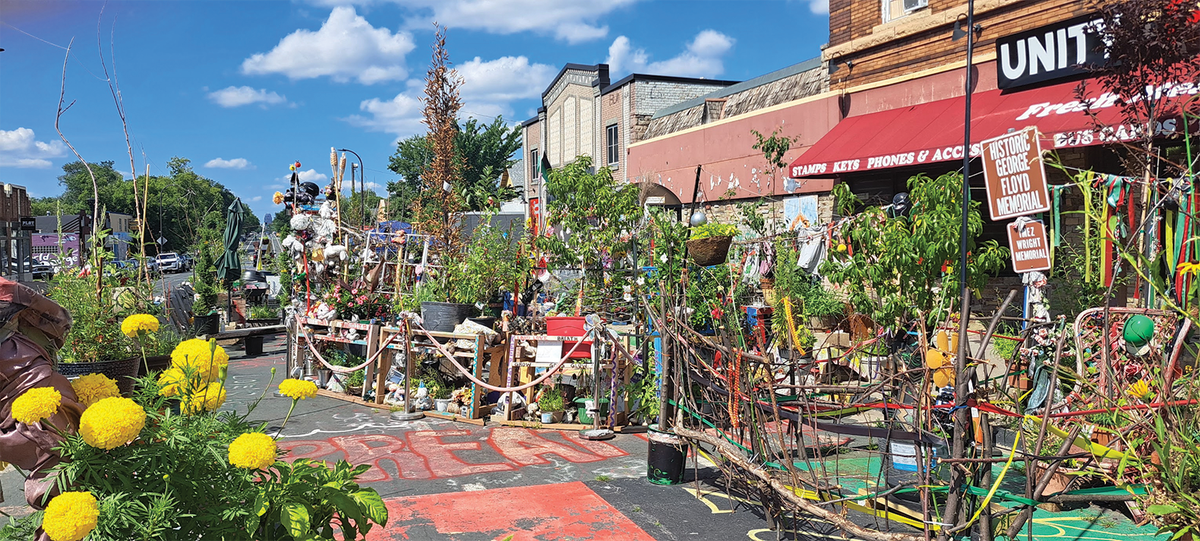
Having been heavily immersed in social justice advocacy since 2016, I was finally able to visit the George Floyd Memorial. (Yes, I was Spokane NAACP President during that period.) That opportunity came thanks to the great work of Florida gubernatorial candidate Desmond Meade and the incredible human family at the Voting Justice Project.
After spending a couple of hours there, I found myself with my ears ringing and struggling to verbalize what I was experiencing. Truth be told, I had been working through a couple of days of rough sleep and doing some pretty serious processing with this crew. Yet none of that minimizes the impact of the experience or my realization of just how much unprocessed emotion I had been carrying since that period.
The violence that has been unleashed within our human family—and so disproportionately directed at communities of color—is the primary reason I ever stepped into that NAACP role in the first place. While I continue this work, now serving my second term as a State Criminal Justice Training Commission Commissioner, I believe it was only by visiting this site in person that I was finally able to encounter some of the feelings I had locked away—the compartmentalized pain I was still carrying.
As a group, we spent considerable time processing what we had seen and experienced. One of the immediate, “smack-you-in-the-face” realities was the lack of meaningful fiscal investment in the people and neighborhoods surrounding the memorial. Another obvious reality was the violence itself—and, even more specifically, the issue of sanctioned violence.
I’ve touched on our relationship with violence in earlier writings. While we are deeply connected to a natural environment where violence certainly exists, there is also truth in the fact that our uniquely human brain and consciousness give us the capacity to mitigate much of it. When we begin accurately and authentically assessing ourselves—as individuals, as communities, as a nation, and as a species—our ability, and our responsibility, to reduce those tendencies becomes abundantly clear to anyone willing to look.
Some of the questions now become: Why aren’t we? What role do trauma and bias play in all of this? And perhaps most importantly, what could we do, what should we do, and what will we ultimately choose to do?