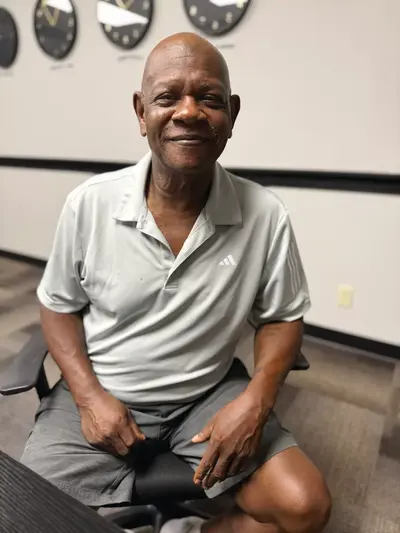
Editor’s Note: This interview reflects Roderick “Rod” Bumpas’ personal experiences, observations and allegations regarding his family’s interactions with the Mead School District and his legal battle. The Black Lens presents his account in his own words.
Rod Bumpas is a longtime Spokane resident, a graduate of Lewis and Clark High School, U.S. Army veteran, and father who says his advocacy began with watching his son struggle in a school environment where concerns about race were minimized or dismissed. He alleges that what started as concerns over his son’s treatment grew into a racial discrimination complaint, missing public records and a legal battle that ultimately centered on the Public Records Act rather than racial discrimination. Throughout the process, Bumpas says he often stood alone, emotionally exhausted but determined to keep speaking out.
Q: When did you first become concerned about how your son was being treated?
Bumpas: “It started in middle school, but it became clear in ninth grade when he was playing basketball. They had him on junior varsity, but they weren’t letting him play. He asked to be moved back down to the freshman team so he could at least play, and they wouldn’t let him.
“They tried to deadlock him. You have him on junior varsity, so he can’t show his skills, but you won’t let him go back down where he can play.”
Q: What did your son eventually tell you had been happening?
Bumpas: “It was the last game of the season. On the way back, he said, ‘Dad, you were right.’
“‘I didn’t want to tell you things until the season was over.’”
Bumpas says that conversation revealed experiences his son, Kolby, had kept to himself throughout the season, including alleged racial slurs, racially charged comments at team dinners and adults, including staff, who laughed rather than intervened. He believes Kolby remained silent because he feared speaking up would jeopardize his opportunity to play.
Q: What was it like learning that your son had been carrying those experiences alone?
Bumpas: “I am his mother and his father, and you don’t mess with my son.”
Bumpas says learning what his own son had endured was especially painful because Kolby never fully shared the extent of what was happening. Looking back, he believes his son withheld details because he knew his father would do everything possible to protect him and feared a confrontation would only make matters worse.
To his son’s point, Bumpas also alleges that after he filed a racial discrimination complaint against a coach, the coach addressed the team and announced that a parent had accused him of racial discrimination and unfair treatment of his son. With only two Black players on the team, Bumpas believes the statement functioned as a coded message intended to intimidate and coerce. He says Kolby overheard teammates discussing the complaint and no longer felt safe at school. Bumpas says he withdrew his son from Mead that same day. The dog whistles were blowing.
Q: Why do you think some parents are afraid to challenge a school system?
Bumpas: “They’re afraid of retaliation. That’s what my son was afraid of. He thought if I complained, they would take it out on him.
“I didn’t have any help. I was standing by myself. Other parents would call me and say, ‘Rod, you need to say this.’ I’d tell them, ‘No, you need to come with me.’ But they wouldn’t do it.”
Q: What happens when a Black parent becomes angry while advocating for a child?
Bumpas: “When a Black parent gets angry, then they make the parent the problem.
“They stop focusing on what happened to your child and start focusing on how you reacted. They call something that is racism something else. They don’t want to address the real problem.”
Seeking Legal Help
Bumpas says he retained an attorney intending to pursue a racial discrimination case involving his son. According to Bumpas, he was advised to obtain public records from Mead School District to support the discrimination claims. When records produced by the district did not include what Bumpas believed was a key racial discrimination complaint from 2023 that he made himself, he says the attorney concluded there was insufficient evidence to pursue discrimination. The missing complaint was eventually located through Bumpas’ own efforts, he contends. He says the legal strategy then shifted away from racial discrimination and toward a Public Records Act claim. He emphasizes that the public records request belonged to him because he submitted it, yet the lawsuit proceeded solely in Kolby Bumpas’ name (Superior Court of Washington for Spokane County, Case No. 25-2-03694-32), who was an adult at the time of the lawsuit.
Q: What did you want from the legal process?
Bumpas: “I didn’t care about money. I wanted the whole school to change from top to bottom.
“Money doesn’t fix the problem. If the institution doesn’t change, the same thing is going to happen to another family.”
Q: Why can it be difficult for parents to navigate these systems?
Bumpas: “The average parent doesn’t know the inner workings. When you don’t know how to navigate the legal system, you think people have your best interest in mind.
“Parents need support. They need to document everything, ask questions and find people who understand the process.”
Q: What do you wish you had done differently?
Bumpas: “I would have snatched him out of that school and put him somewhere else.
“Parents have to trust what they see. Don’t dismiss something because the school has a good reputation. Don’t assume that because a school is supposed to be better, it is better for your child.”
Q: What has this fight cost you personally?
Bumpas: “A parent goes through hell.
“This stuff has worn me down. Completely. But I’m trying to stay strong.”
“I am a fighter.
“I’m not doing this because I want attention. I’m doing it because I don’t want another family going through what mine went through.
“Justice to me is change. I don’t care about money.
“I’m going to continue speaking out. They don’t like it, but I’m not going to stop.”
Attorney Responds
The Black Lens contacted attorney Marcus Sweetser of Sweetser Law Office seeking comment on the legal challenges of pursuing racial discrimination claims in schools in the Bumpas case and the decision not to pursue such claims. Citing his professional duty of attorney-client confidentiality, Sweetser said he could not publicly discuss the specifics of his representation or respond to characterizations of a former client’s case.
He did provide the following statement:
“Racial discrimination is real, serious, and destructive. The role of a civil-rights lawyer is to listen carefully, investigate honestly, advise candidly, and respect every client’s right to decide their path forward.”