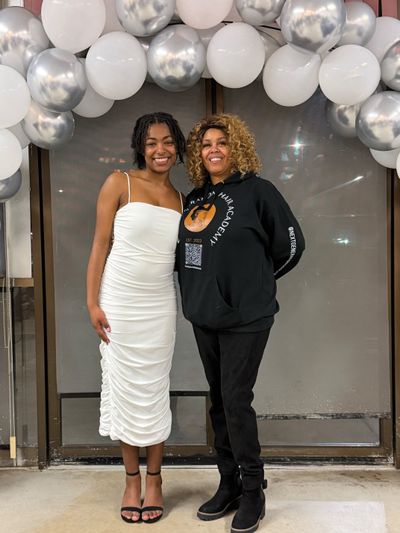
An Interview with Dawniella Moore — Q: Can you introduce yourself and share your work?
Dawniella Moore: I am the founder and CEO of Next Generation Hair Academy and the owner of Dawn’s Braids, Dreads, and Twists. I’ve been in this industry for about two decades, and I am a master loctician based in Spokane. I opened my current location to create the academy because I saw a need for education that simply wasn’t being met.
Q: What inspired you to start Next Generation Hair Academy?
Moore: Next Generation Hair Academy was created to educate and empower people about textured hair—the science, the care, and the cultural significance that has often been missing from traditional beauty education. When I was in cosmetology school, textured hair was skimmed over. I remember three young girls with dense Type 4C hair being turned away because no one knew how to care for their hair. That moment stayed with me. It was unfair, and it showed a deeper issue in how education systems overlook our needs.
Q: You’re speaking directly to issues of equity in education. Why is that so important in this work?
Moore: Thank you for recognizing that. This is about equity. When institutions don’t teach textured hair properly, they are excluding an entire group of people. Our academy fills that gap by teaching not only technique but also cultural understanding. People deserve professional, informed care for their hair, and that starts with education.
Q: What are some common causes of damage to textured hair?
Moore: A lot of damage comes from a lack of knowledge. People don’t always know how to properly detangle or wash their hair. You should never detangle dry hair. You need to section it, work from the ends up, and be gentle. When people skip these steps, they shred the hair, causing split ends, tangling, and matting. I’ve had clients where I had to detangle multiple times because the hair kept matting back up due to damage. Excessive heat and improper handling create the same issues—breakage, dryness, and split ends.
Q: Can you explain traction alopecia and how it happens?
Moore: Traction alopecia is hair loss caused by constant pulling and tension on the scalp over time. Styles like tight braids, ponytails, cornrows, or even locs that are retwisted too tightly can damage the follicles. When follicles are inflamed and stressed, the hair begins to thin and break at the root. If that tension continues, the follicle can become permanently damaged, and the hair may stop growing altogether.
Q: Are protective styles harmful, or is it about how they’re done?
Moore: It’s about how they’re done. I’m not against protective styles at all. What we teach is the proper way to install and maintain them. Many people learn from YouTube, but they miss the fundamentals. Protective styles should never cause pain or tension. Healthy styling starts with proper preparation—clean, conditioned, and detangled hair—and continues with mindful installation.
Q: What are some key tips for maintaining healthy hair with protective styles?
Moore: First, never install styles too tightly. Always read reviews and look at a stylist’s work. Prepare your hair properly before installation. Use sulfate-free shampoos that don’t strip moisture and look for ingredients like shea butter or coconut oil. Maintain your style with aftercare—wear a bonnet at night, keep the scalp clean, and don’t leave styles in too long. Also, be careful with glue. Never apply bonding glue directly to the scalp. It should go on the weft or a protective barrier. Improper use can lead to irritation, buildup, and even hair loss.
Q: What is your core message when it comes to textured hair?
Moore: My main message is education. People need to understand hair types, texture, porosity, and density. They need to know how to care for their scalp and recognize signs of damage. But beyond that, this is about culture. Textured hair has historical and cultural significance, and it deserves to be treated with knowledge, respect, and care. That’s what we teach—so people can finally receive the level of care they deserve.
On Monday, March 16th, students graduated from the Next Generation Hair Academy’s Afro-Textured Hair Education Program as the very first Pioneer Cohort. High school senior Shamiya Johnson went through this innovative program and shared:
“For a while, when I was younger, my mom would braid my hair a lot. But as I was growing up, she stopped doing my hair, and it was hard for me to take care of my textured hair. I came to learn more about my hair, and Miss Dawn is a very great teacher. I encourage other young people to come out and learn because she’s a great teacher. I liked the class because I like learning about my specific character.”