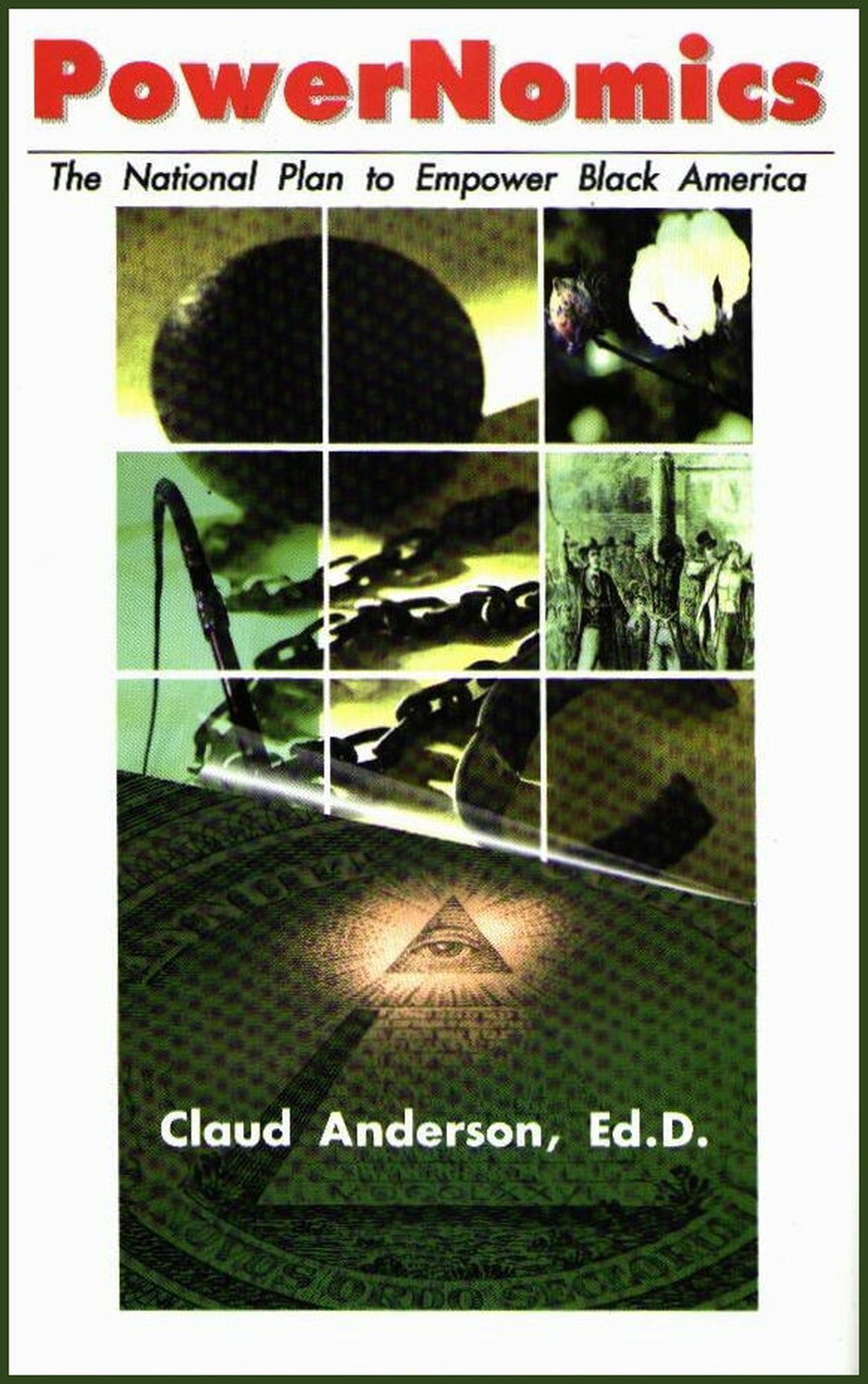
Dr. Claud Anderson’s “PowerNomics” opens with a simple but profound truth: building wealth is not the same as earning money.
Money, without ownership, is a fleeting tool. A paycheck feeds you today; wealth feeds your grandchildren. Wealth survives layoffs, recessions, pandemics, and political shifts because it is anchored in assets, institutions, and control. The harsh reality is that in 1865, Black Americans owned half of one percent of the nation’s wealth – and in 2025, that number is virtually unchanged. This stagnation is not accidental. It is the outcome of a centuries-long system of deliberate economic exclusion, enforced by policy, law, and violence.
PowerNomics is not just an economic theory. It is a national blueprint for self-sufficiency, rooted in the history of how wealth is built and protected. Anderson lays out five socio-cultural layers that explain why Black wealth remains stagnant – and how to reverse it.
The Permanent Underclass
Anderson warns that Black Americans are being positioned as a permanent underclass. This is not simply about wages – it is about exclusion from ownership, industry control, and capital access. New immigrant groups often surpass Black Americans economically, aided by incentives never extended to the descendants of enslaved Africans.
The Exceptional Identity
Anderson draws a clear line between “Native Black Americans” – descendants of enslaved Africans in the U.S. – and Black immigrants. While solidarity matters, erasing this identity under generic labels like “minority” weakens the specific case for restitution owed to those whose labor built this country for free.
Immigrant Advantage vs. Black Disadvantage
Many immigrant-owned businesses flourish inside Black neighborhoods, extracting wealth without reinvesting. This is not about personal bias – it is about systemic economics. U.S. immigration policies have historically given others a head start, while Black entrepreneurs fight discriminatory lending and zoning practices.
The Black Wall Street Legacy
From Tulsa’s Greenwood District to Durham’s Hayti, early 20th-century Black business hubs thrived through disciplined group economics. Their destruction – via race massacres, hostile legislation, and urban renewal projects – was calculated, not coincidental.
The Half of 1% Crisis
Owning less than 1% of a nation’s wealth after 400 years is not a statistic; it is an indictment. White wealth multiplies through inheritance, trust funds, and tax shelters, while Black wealth is drained by predatory lending, gentrification, and intergenerational poverty.
The Five Floors to Wealth-Building
Community: Cooperative buying clubs and investment pools to secure land and businesses.
Politics: Support candidates who deliver tangible results for Black communities.
Courts/Police: Fund protections for Black-owned property.
Media: Build Black-owned outlets to control economic narratives.
Education: Teach entrepreneurship and financial literacy from middle school onward.
Dr. Anderson’s warning is urgent: the greatest threat is not just the trap – it is the silence of those who claim to lead. If we understand the design, we can engineer our escape.
(To be continued in Part II: “A people without leadership are a people without direction.”)