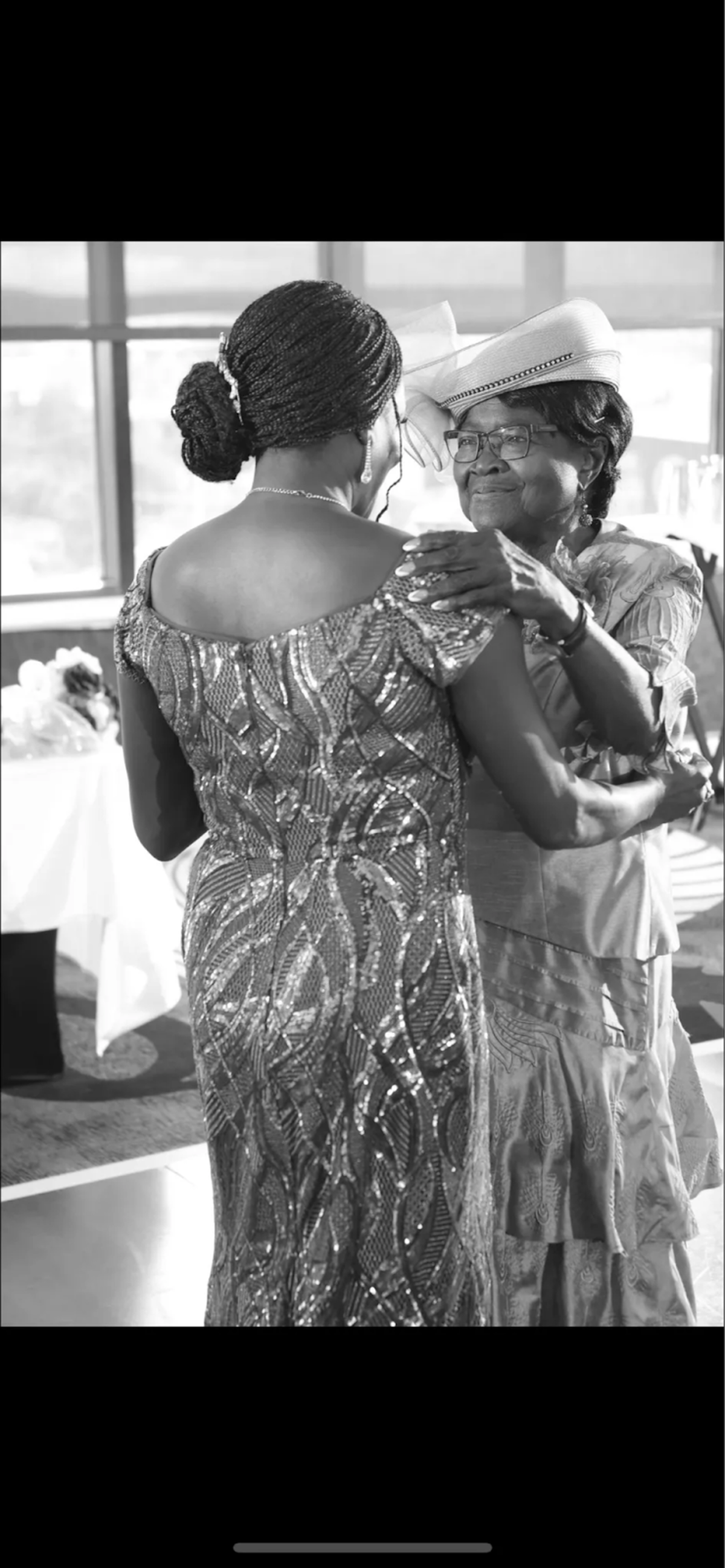
For most of my life, she was just “Mom.” A beautiful Pastor’s Wife and she always had a wonderful presence in our lives. I have amazing memories growing up – she was a wonderful mom. She loved church, laughter, telling stories that made no sense and made perfect sense at the same time. And above all, she loved her family. Fiercely.
When Mom’s health began to decline from kidney failure, it felt like a slow unraveling. I remember the day I decided to quit my job to care for her. It wasn’t a question, really – it was a knowing. She had taken care of me all my life; now it was my turn.
The early days weren’t easy, but they were full of small, meaningful routines – making her breakfast, adjusting her pillows, watching old sitcoms together. And every week for a year, I took her to lunch. Just the two of us. Sometimes she laughed, cried and told stories from her youth like she was spinning gold from memory. Other times, she was quiet, far away.
Eventually, the strain grew. I was tired in a way I didn’t know how to describe – tired in my bones, in my spirit. I asked my daughter to help, to step in where I was unraveling. That created tension neither of us saw coming. The shifting roles, the emotional weight – it was a lot. And then came the choice to bring in outside help. I needed to be her daughter again, not just her nurse.
Toward the end, Mom changed. Her words grew sharper, sometimes cruel. I know now it was the illness, the pain, maybe even fear – but in those moments, it stung. I’d look at her and see the woman who held my hand through scraped knees and heartbreaks, and wonder why she now pushed me away. But even through the hurt, I stayed. I wanted to be there. I chose to be there.
When she passed, she was nonverbal. No last words. No “thank you,” no “I love you,” no “I’m sorry.” I don’t know what she was feeling, or if she knew I was sitting there, holding her hand one last time. But I hope she did. I hope, somehow, she knew how much I loved her – even when we were tired, even when we were both hurting.
I look back now with mixed emotions. It was hard. But I also remember moments of closeness that I’ll carry forever. A smile over lunch. The sound of her laugh in the middle of a hard day. The way she still tried to protect us, even when her body was failing.
Taking care of Mom was the hardest thing I’ve ever done. But I don’t regret it. In the end, it was love. Complicated, messy, real love. The kind that spans generation after generation. The kind that lingers long after words are gone.
I miss you, Mama.