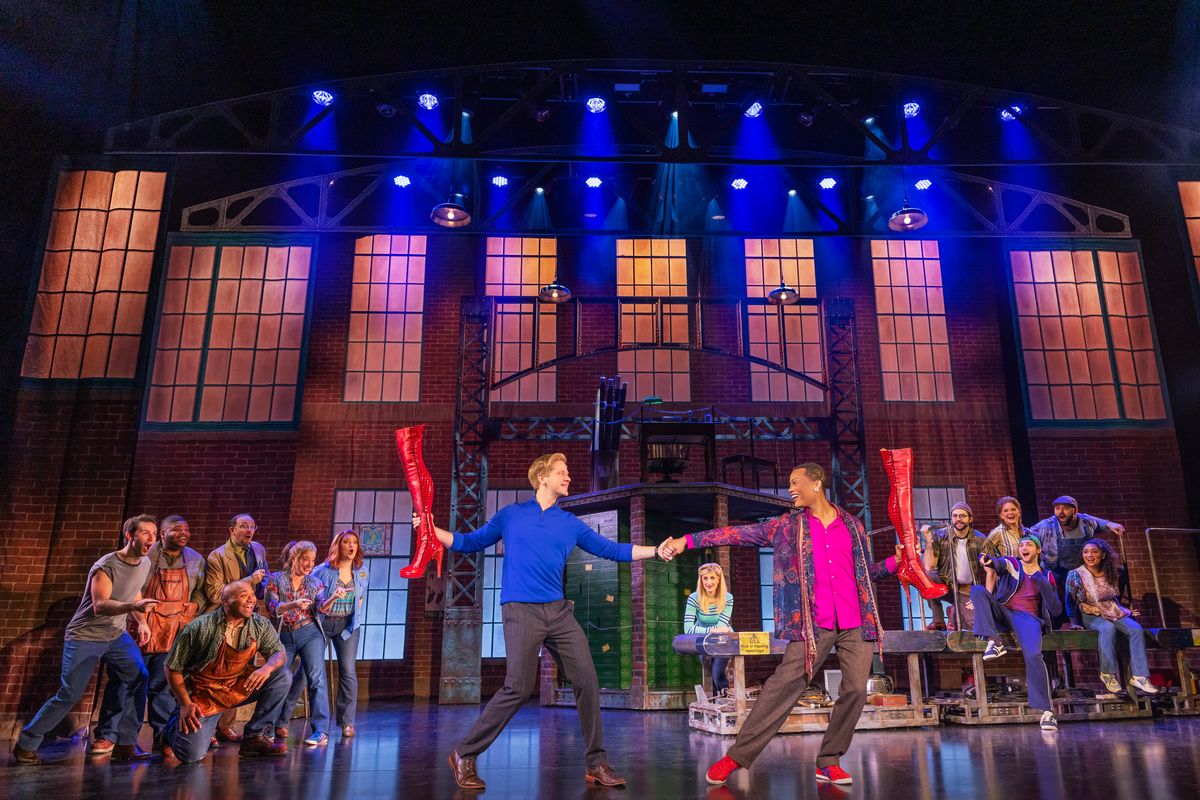
Art as Activism is the theme guiding this year’s youth conversations and community storytelling–an exploration of how creativity challenges bias, expands empathy, and pushes culture forward. In this interview, actor Omari Collins reflects on performance, identity, discomfort, and the radical power of humanity through his work on stage, including his role in Kinky Boots.
Q: Can you tell me a little about yourself? How long have you been an actor, and was this something you always wanted to do?
I grew up in Kansas City, Missouri. I started in the theater in about middle school doing regular school plays and things like that. I really just got the bug for performing there.
I grew up in a household with singers and musicians and all types of things, so music was always influenced in the household. I started taking piano lessons when I was about seven years old, and music has just always been at the foundation of who I am as a person.
I found my love for theater with school plays, and then I found out I could merge the two doing musical theater. I’ve always been a performer. I’ve always been larger than life–always extra, singing and being expressive.
Professionally, I’ve been acting since about 2019–actually making money doing it.
Q: Do you consider yourself a rookie, or do you feel settled in your craft?
I don’t think I’m a rookie or a novice, but I’m definitely not a veteran. I’m very comfortable in what I do, but I wouldn’t say I’m a veteran by any means.
Q: This interview is centered on the theme Art as Activism. What does that mean to you? Is there a higher purpose behind your work?
To know me is to know that I push boundaries–always. My entire existence is pushing boundaries. Every time I step outside my door, I’m pushing someone’s boundaries, whether that’s how I present or the art that I create.
I like to think that art, in its own nature, is to push cultural boundaries and shift the cultural zeitgeist. It pushes people to think past their biases and prejudices and really consider their neighbor and their fellow man.
I think art in itself is always activism. It’s always pushing forward and making sure underrepresented people have a voice.
Q: What does it mean to you to embody characters whose stories challenge stereotypes and invite people to confront acceptance, gender, and community?
At the core of this character and the show really is humanity. It’s to show that we are more alike than we are different.
If we take the time to accept someone as they are, we may find out we actually like the human being versus just what they present outwardly.
It’s not about pushing an agenda. It’s literally about humanity and getting to know who these people are as humans.
Q: Kinky Boots disrupts comfort. What conversations do you hope the production sparks in Spokane?
What I want people to ask themselves when they leave the musical is, “Am I part of the solution or the problem?” Am I making it easier for other people to exist in my spaces as their true selves?
This show is all about heart. It’s about human connection and making sure we take care of the people who take care of us.
Q: How do you navigate discomfort when your art or existence challenges the status quo?
I can only be me. There’s only this version of me you’re meeting–the best me that I can present at this moment.
If that is disruptive to you, that’s not my issue. The only thing I’m concerned with is being the best me possible.
I would ask whoever I’m disrupting to look inward–why am I disrupting you? Why does this ruffle your feathers? That’s worth asking.
Q: Can you share a moment in the show where empathy is created or prejudice is challenged?
“That’s really the foundation of the show. Lola is a cabaret drag queen on her own trajectory who meets a shoe factory owner whose business is failing.
Drag isn’t accepted everywhere, especially in small towns, but Lola does a good job of bridging the gap by saying, “This is my art. I’ll meet you where you are, and we’ll find a middle ground where we can coexist and create something together.”
Q: What role does judgment play in our communities, and how does theater confront it?
As a society, we’ve become so comfortable judging people by their surface presentation.
Until you sit down and get to know someone, you don’t really know who they are. Snap judgments are harmful, especially with people who are recurring in your life.
Our show unpacks that. When people take the time to learn who someone really is beneath the hair, makeup, and glamour, it sets us up to be better humans.
Q: What do you hope this role accomplishes beyond the stage?
For Black queer kids in the audience, I hope they take a piece of power from this. A piece of belonging.
I want them to know they can be their full selves and do whatever they want simply because they see me on stage doing it.
For everyone else, I want people to take a bit of love with them. Even if it’s just questioning, “Am I the protagonist or the antagonist, and why?”
I want people to take a piece of joy from this show.