Black maternal mortality is a reality that pierces through conversations about health equity. It leaves a gaping hole where questions about warning signs and red flags linger once hindsight is too late. Headaches, swelling, erratic blood pressure readings, internal bleeding, pain, blurred vision; these scenarios can play out to an unnecessary, fatal end when Black women are ignored during postpartum care. Compound the dismissal of critical symptoms with the caste system that engulfs health insurance, and you have a recipe for disaster. Ironically, even in cases where private, expensive insurance prevails, the threat of Black maternal mortality is still very much present and even money and resources are not a fail-safe. We must beg the question and demand answers: Why?
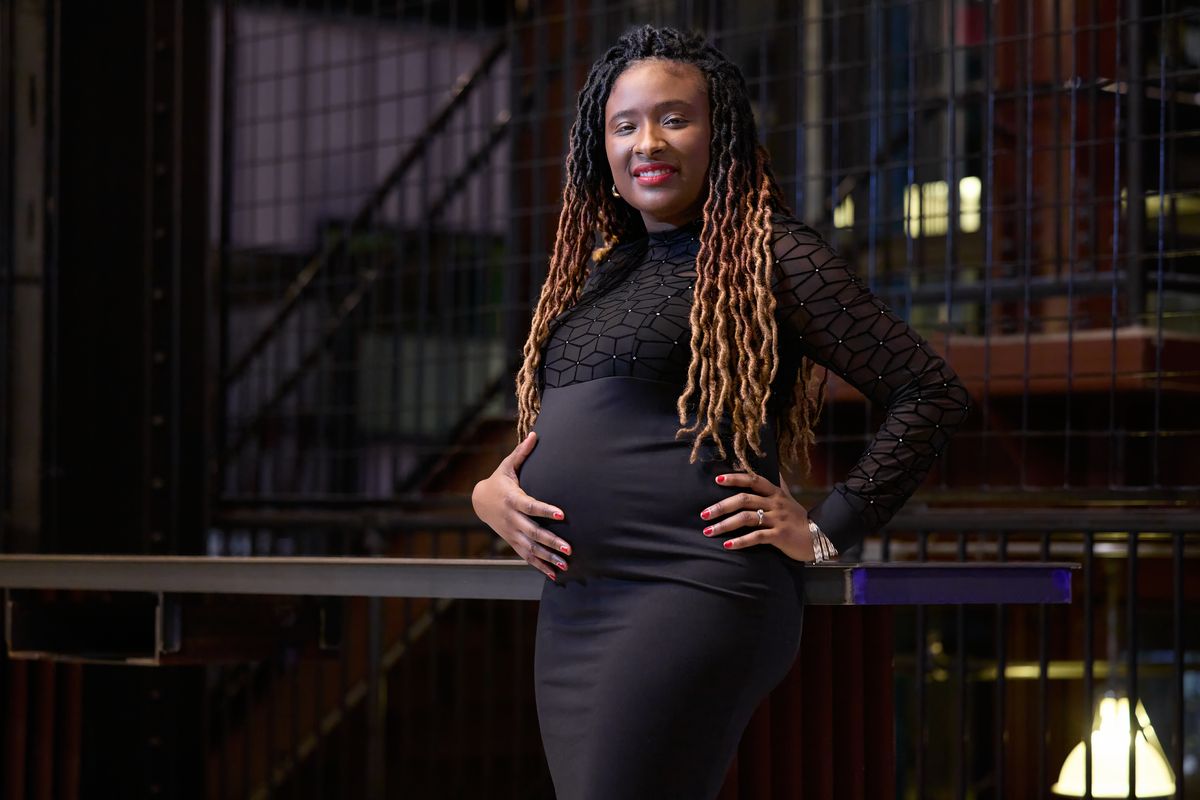
Stephaine Courtney explains that racism is at the core of this and until we acknowledge that, we cannot truly move forward. From the very beginning, Black women have been communal in the birthing experience by way of midwives who acquired knowledge on how to navigate pregnancy when the world didn’t care about their survival. Changing the system and community in correlation to how people understand giving birth and the children who are coming into the world is paramount. She is committed to answering this question out loud. She is equally dedicated to developing solutions that emphasize support, agency, and centering the community as a source of power and strength for Black women during prenatal and postpartum care. Courtney started The Shades of Motherhood Network (SOMN), a nonprofit, in 2021 out of need. This has become her answer.
Since what is past is prologue, the lack of respectful care for Black people was the catalyst for Courtney’s SOMN. As a part of the Learning Project Network, Courtney’s business centers around training, social justice, and art activism, like her Black maternal health art exhibit.
“We realized that we needed to shine a light on the crisis that was taking place with Black women,” she said. “Black women are 3 to 4 times more likely to die due to pregnancy related issues, and 60% of those are preventable. One of those measures of preventability is doulas.
“Research shows that doulas decrease C-section rates, they are 6 to 11 times more likely to spend time with families or individuals as they are going through prenatal and postpartum, and most importantly they build a strong relationship of rapport and connection with the family, which in return helps with vulnerability and being transparent about how they are feeling.”
Creating a BIPOC workforce that bolsters doula services is a priority. Presently, SOMN has 17 doulas who are funded to provide services and resources tied to culture, language, and connection. She shares that in a data driven field like health care, it is often hard to quantify Black women’s experiences with numbers (i.e. how many times have their needs been ignored?) which is why the advocacy of doulas is extremely valuable. Last year the organization distributed over 500 wellness boxes containing fresh fruits and vegetables, serving over 44 families.
It was a doula that helped Courtney recognize that a persisting headache was a sign of infection during her first pregnancy, which allowed her to get the care that she needed.
When reflecting on the power of culture, Courtney says that it reminds us how to treat, care for, and bond with one another.
“It reminds us of our roots and strength,” she said. “Focusing on cultural care empowers Black women to stand in their truth and their beauty when it comes to maternal health.”
This prioritizes their journey and allows their stories to be heard, giving them the respect of care that has been denied through time immemorial. Courtney says she wants to see Black women stand in the maternal health space in a powerful and joyful way.
“Not owning their own bodies or their own children stripped them of their choices,” she continued.
Black Maternal Health Week is needed to crush the crisis once and for all.
“When you elevate peoples’ voices, you can actually hear the problems that are going on and it allows people to create real solutions that are focused on the individual and not focused on a theoretical idea.”
A case in point is the partnership that SOMN has with the Washington Blue Band Initiative for preeclampsia. When a woman has this diagnosis, SOMN steps in to provide education and resources. Women are given a blue band to wear on their wrist so that it can be recognized by health care providers that there is an existing health concern.
“We encourage them to keep that blue band on so that people know they have preeclampsia,” she said, “and if it turns for the worst, there’s not additional questions that are asked for them to prove what they are saying. That symbol helps communicate that this is a serious situation.”
Preeclampsia is a common condition in Black women that can lead to organ failure or death. It is correlated to high blood pressure and many signs are overlooked because a lot of times, women normalize their pain, particularly black women.
Shades of Urgency is this year’s SOMN theme for Black Maternal Health Week, and its aim is to inspire resiliency through joy, healing and reclaiming one’s story. The SOMN is a vanguard in terms of healing the fractures in the Black community and breathing new life into the process of bringing life into the world, while protecting Black womanhood. This grassroots approach to maternal health emphasizes sisterhood, reinstating both beauty and power, and spurring collectivism while also honoring the individual.
Black Maternal Health Week is April 11-20. It will include workshops by local experts, a birth justice film screening at the Magic Lantern, and a special keynote address of author of “Post Traumatic Slave Syndrome – America’s Legacy of Enduring Injury and Healing,” Dr. Joy DeGruy. These events will take place at the WSU downtown location. Please see the flyer for details.